
Years of handling Datsun 240Z restorations have revealed a consistent truth: the difference between a car that lasts and one that merely looks good comes down entirely to what happens before the paint goes on. The Datsun 240Z is one of the defining classics of the Japanese automotive era — and the cars retailed by Bavaria Sports Cars are prepared to a standard that reflects that significance. What follows is a complete account of how that process works, stage by stage, from the moment a Datsun 240Z arrives through to the moment it leaves.
Rust is the universal tax on time, and on a steel-bodied car like the Datsun 240Z, it is rarely superficial. It hides in cavities, migrates behind trim, and advances steadily inside box sections that were never designed to be inspected. What has been witnessed across many years of working with these cars is that the extent of corrosion on any given Datsun 240Z is almost always greater than it first appears — and that the only intelligent response is to expose everything before forming any conclusions about what needs to be done.
"The extent of corrosion on any Datsun 240Z is almost always greater than it first appears. The only intelligent response is to expose everything before drawing any conclusions."
Bavaria Sports CarsComplete Strip-Down & Assessment
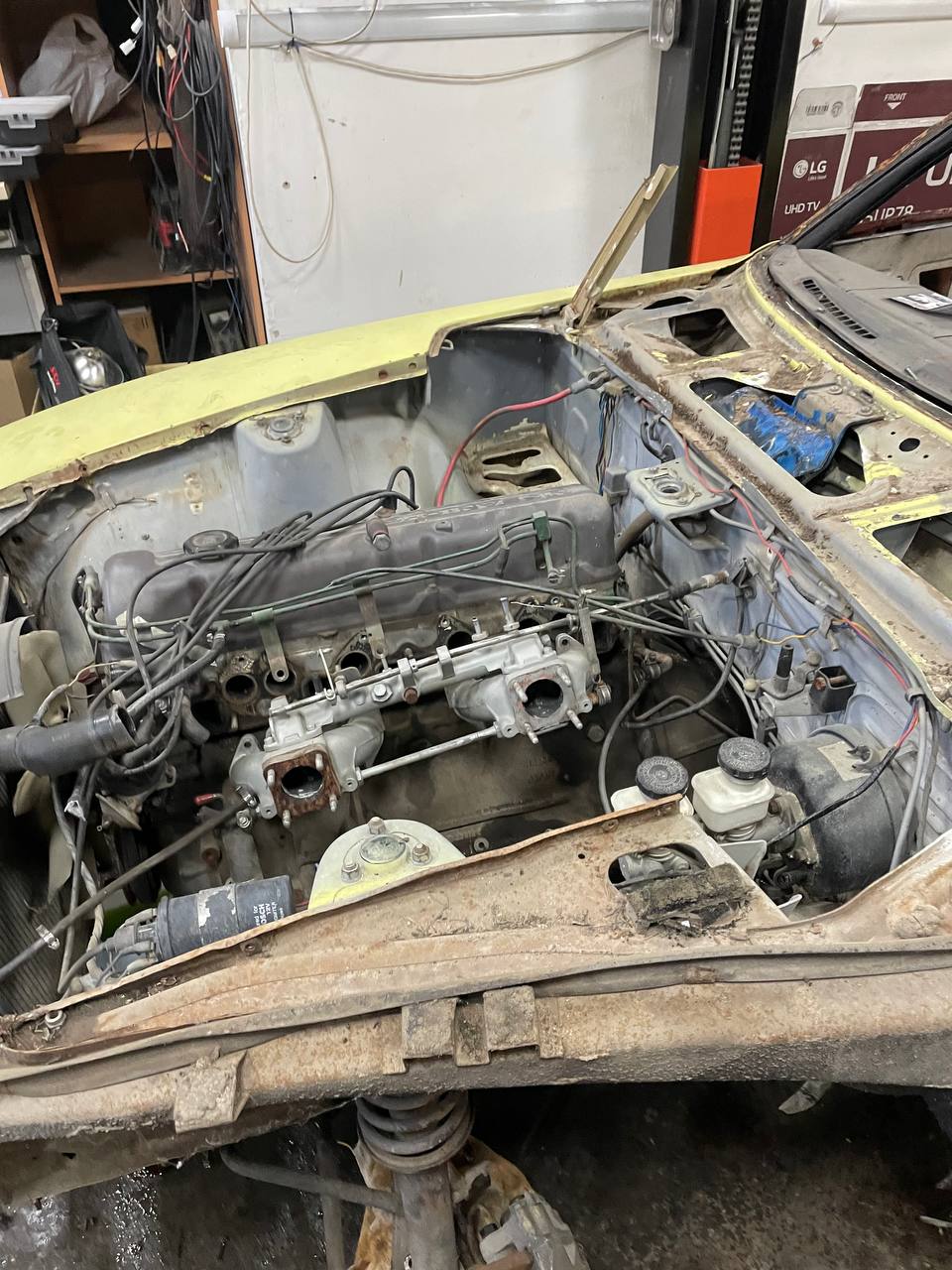
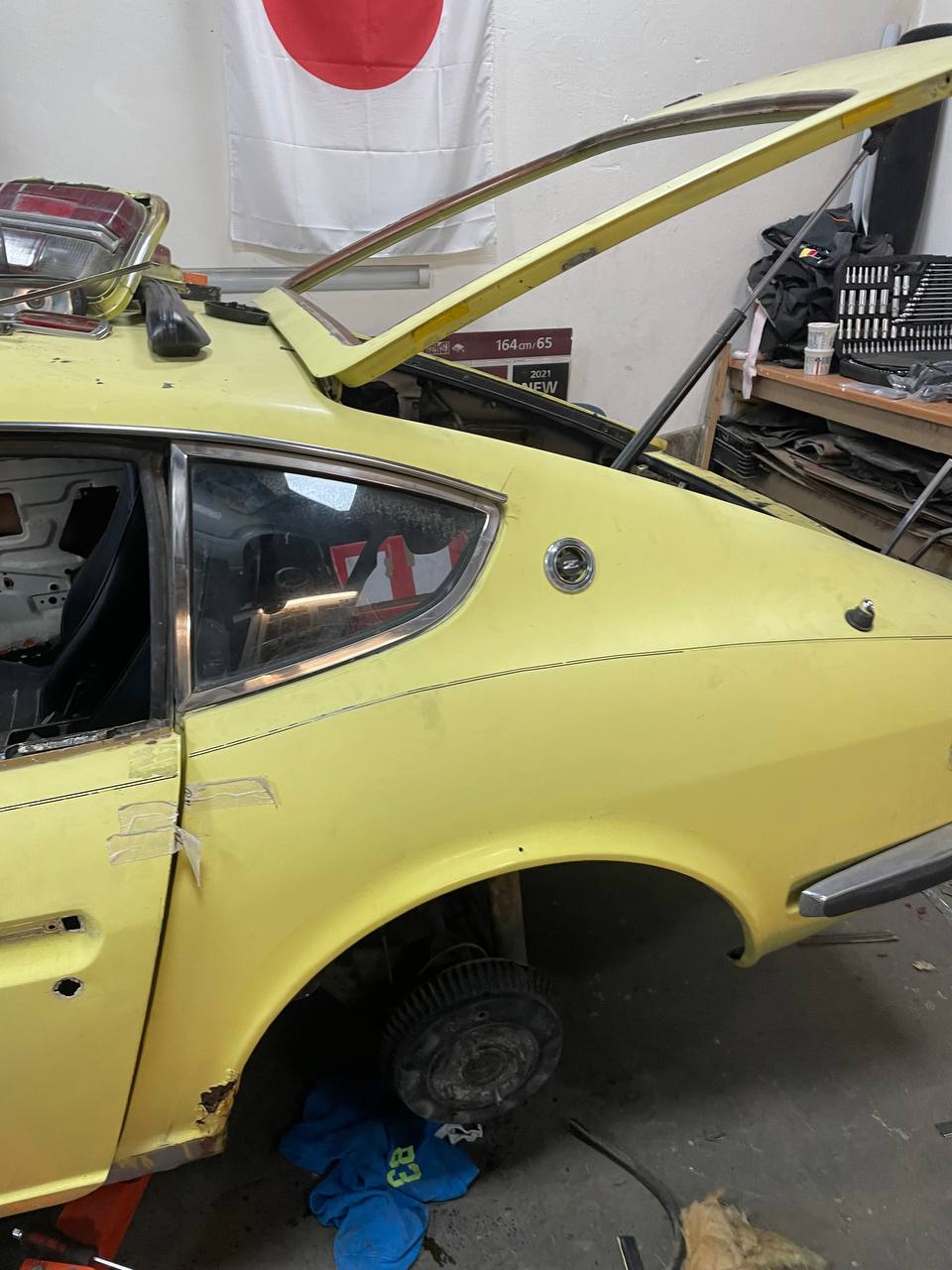
The process begins with a complete disassembly. Engine, drivetrain, interior, glass, trim, seals, wiring harnesses, suspension — everything comes out. This is not merely preparation; it is diagnosis. The S30 body was engineered with cavities that trap moisture for decades. A Datsun 240Z that presents well from the outside can conceal significant corrosion in its inner sills, floor sections, A-pillar lower sections, spare-wheel well, and rear valance — areas that only become visible once the car has been fully stripped.
The strip-down is methodical and documented. Every bolt, bracket, and fitting is catalogued. The purpose is not simply to dismantle but to understand — to learn the car's history, identify every previous repair, and map every area requiring attention before the work begins. The Datsun 240Z has characteristic rust locations that become familiar over years of working with these cars. Identifying them all — not just the obvious ones — is the foundation on which everything else rests.
Sandblasting to Bare Metal
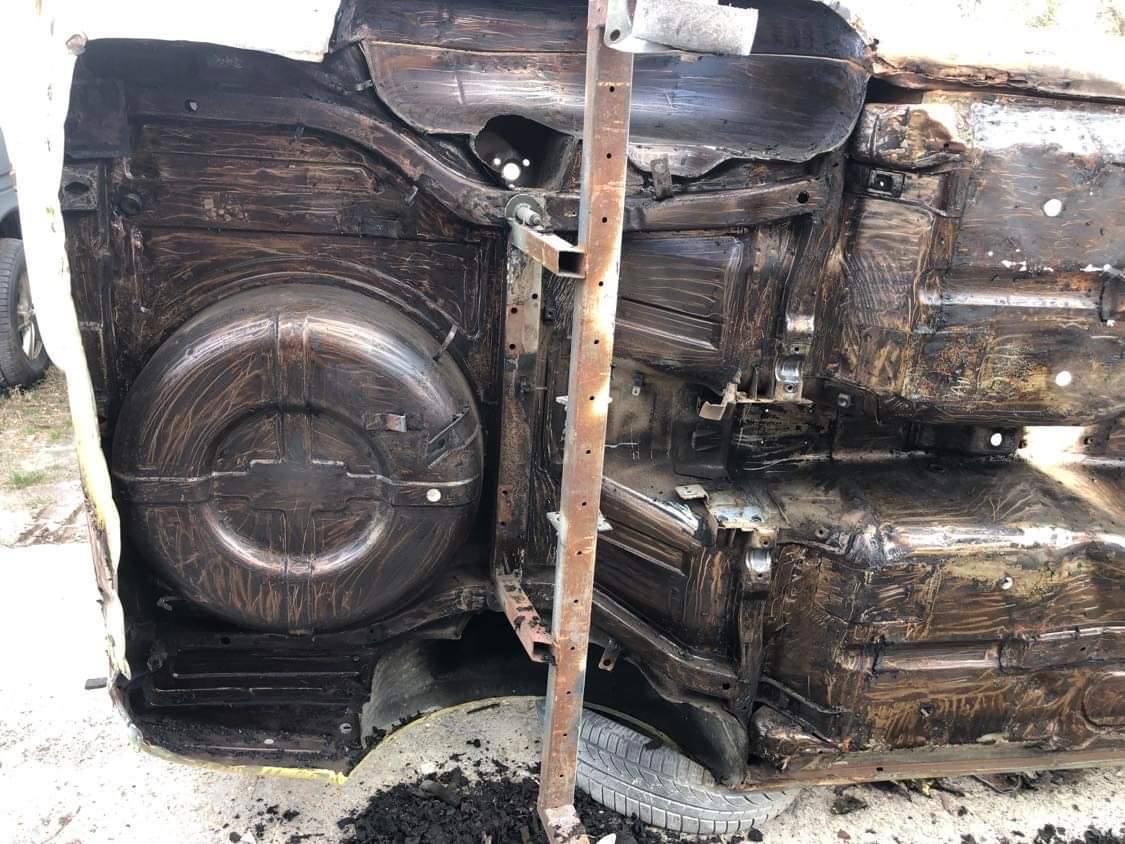
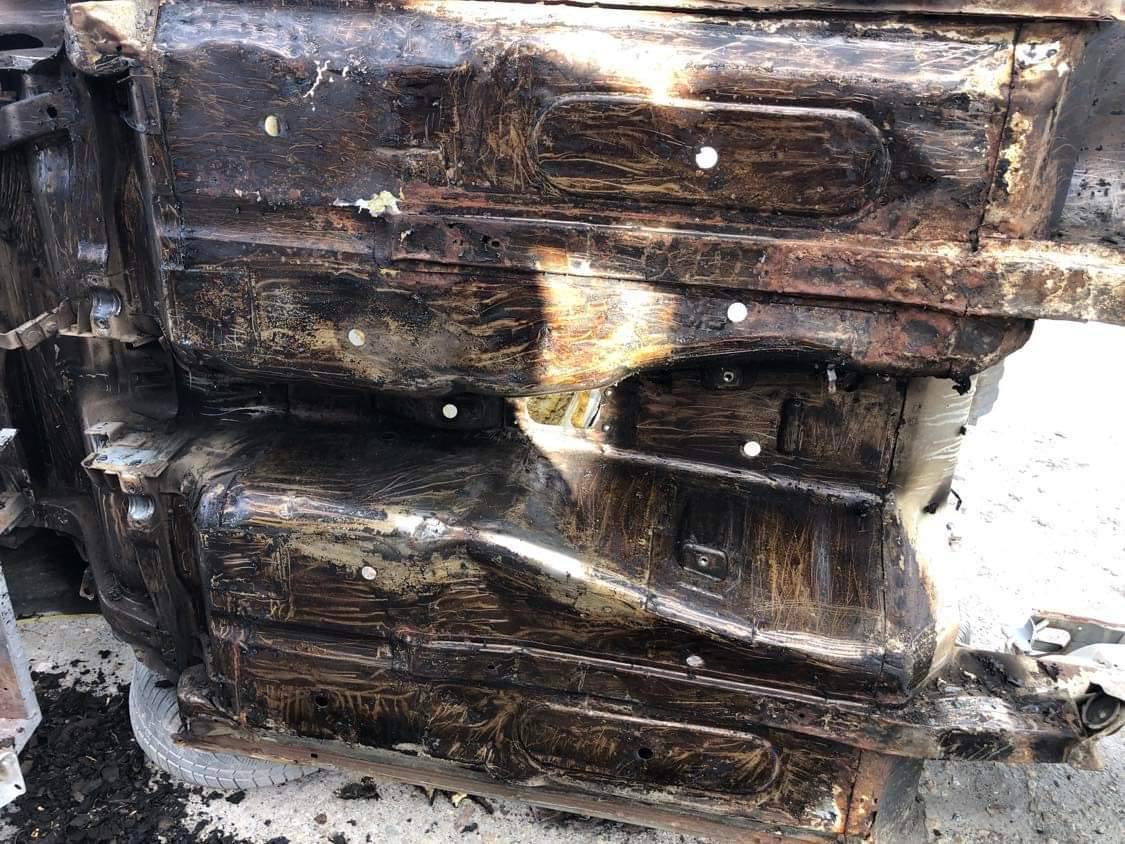
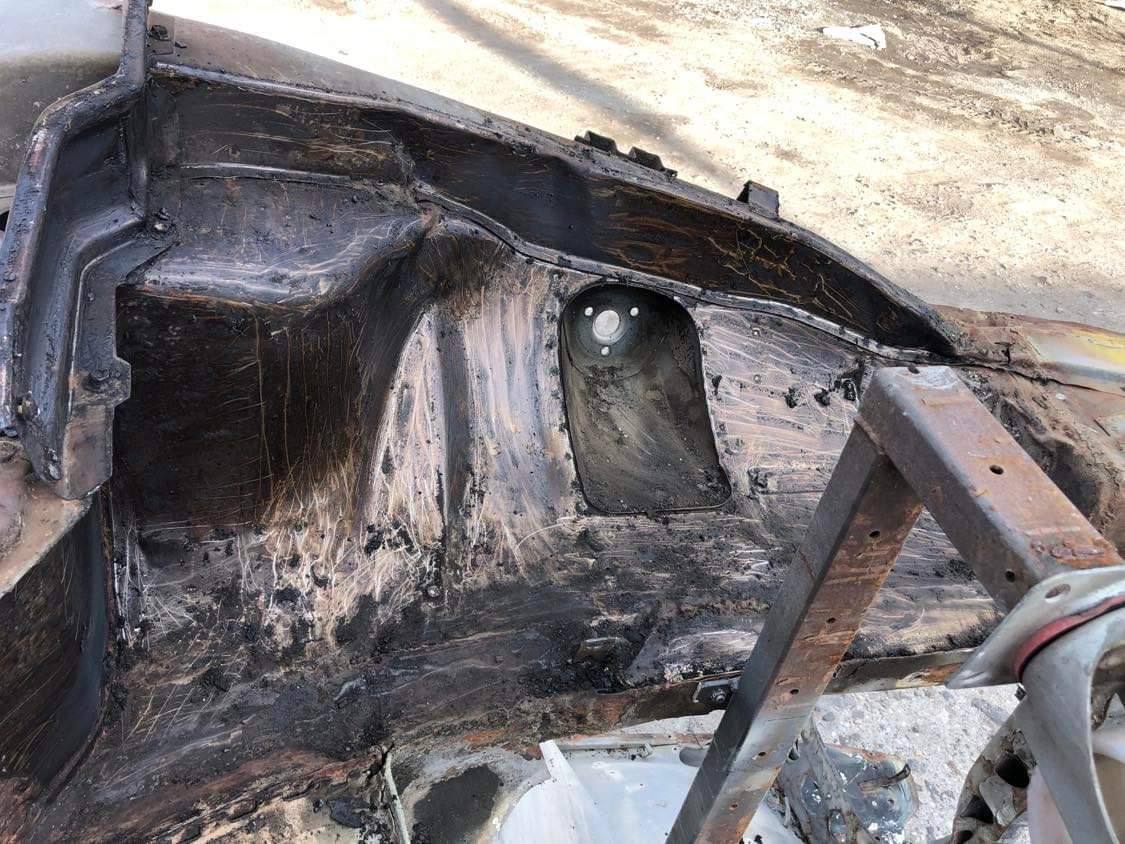
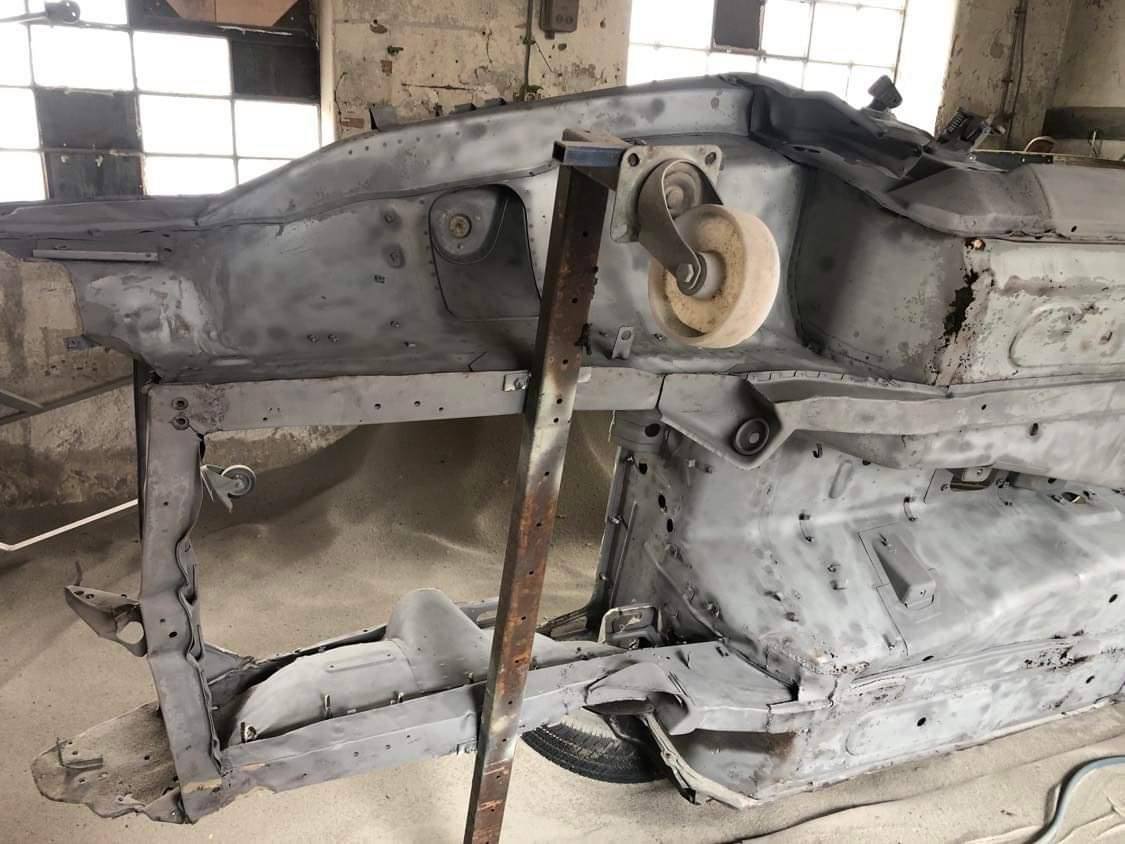
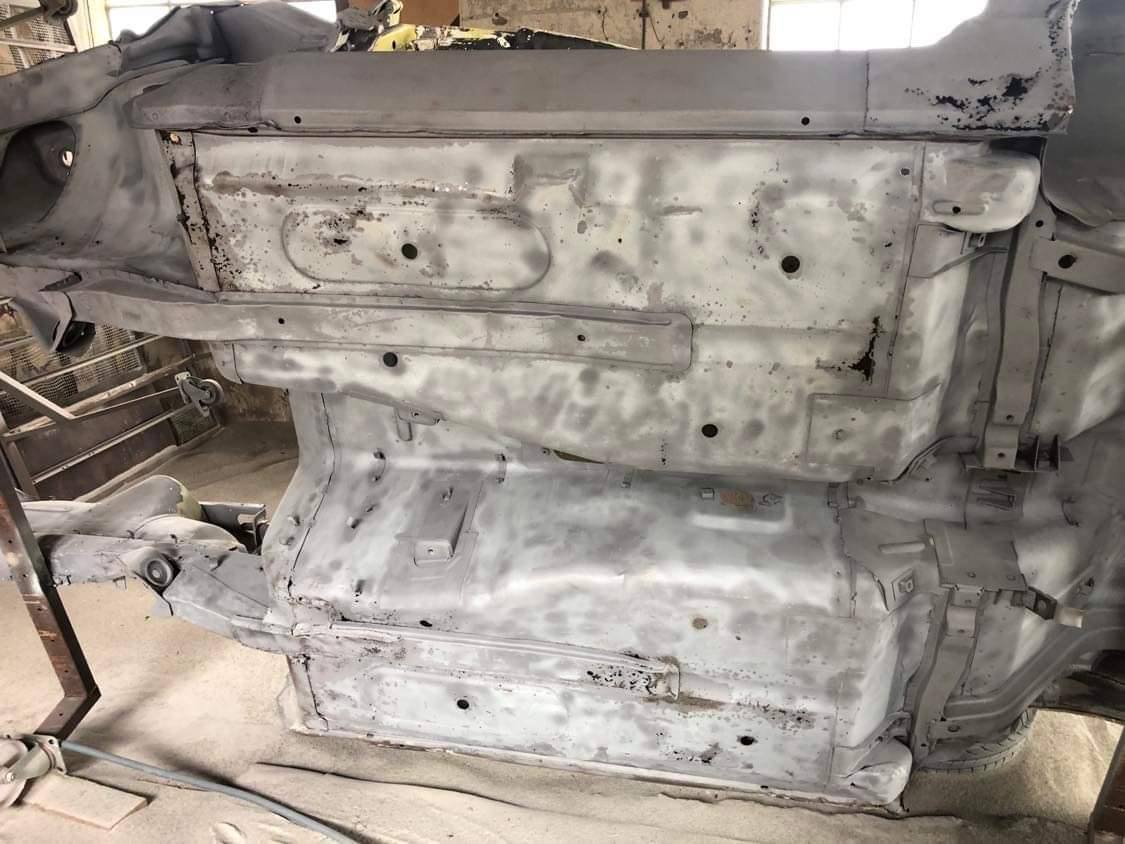
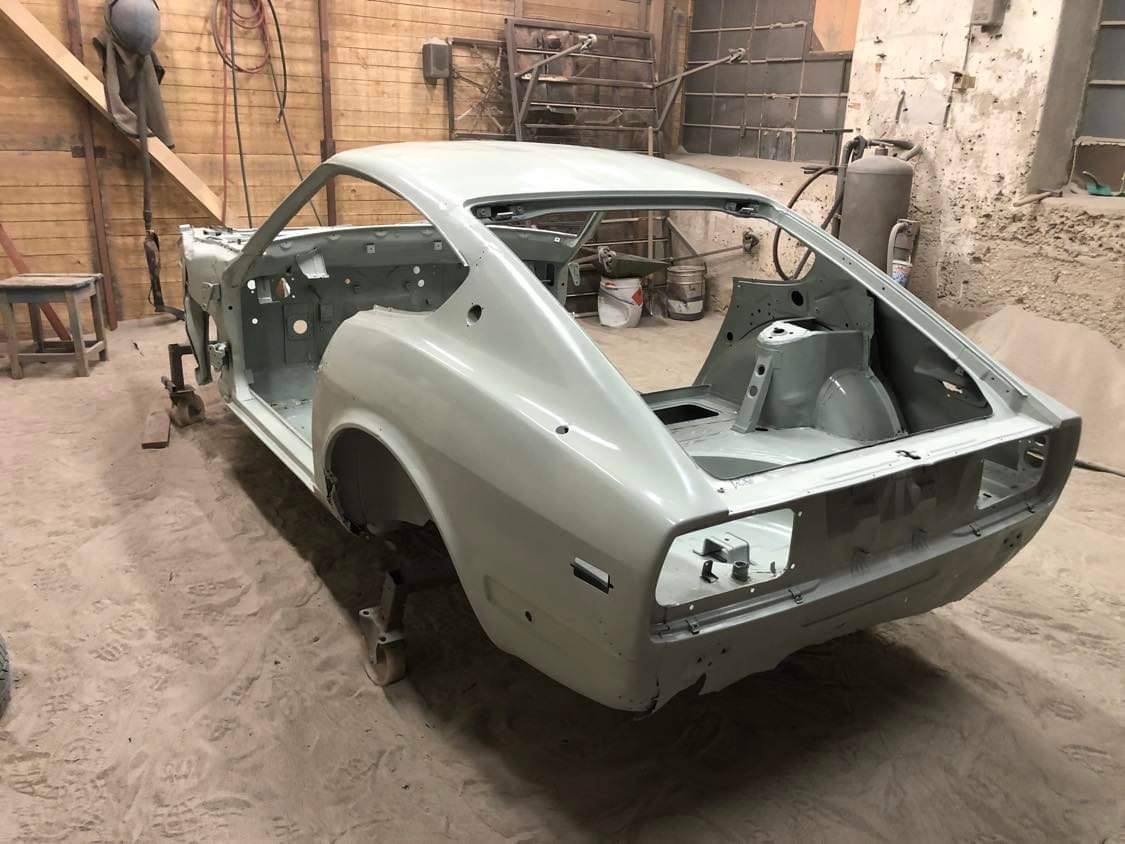
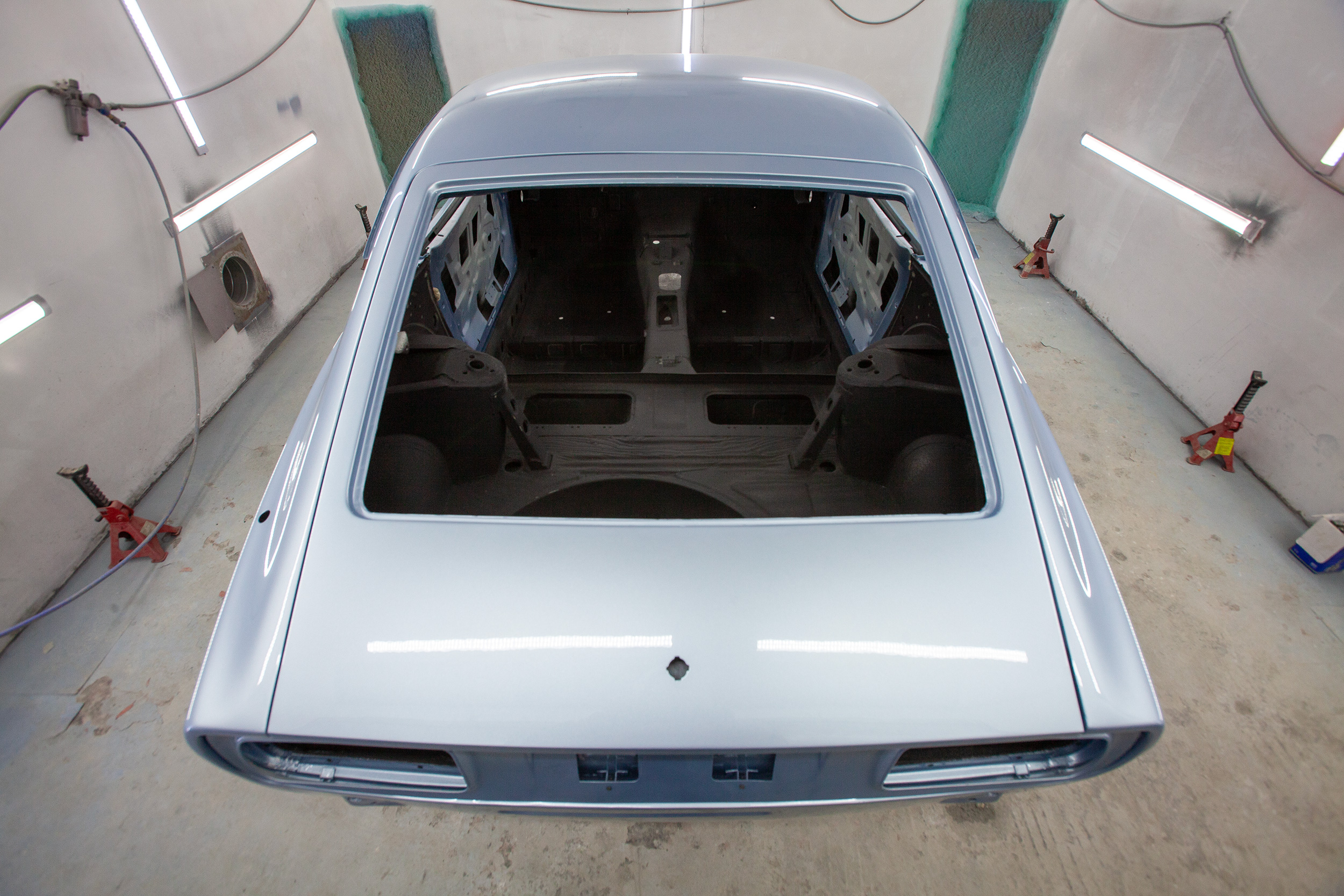
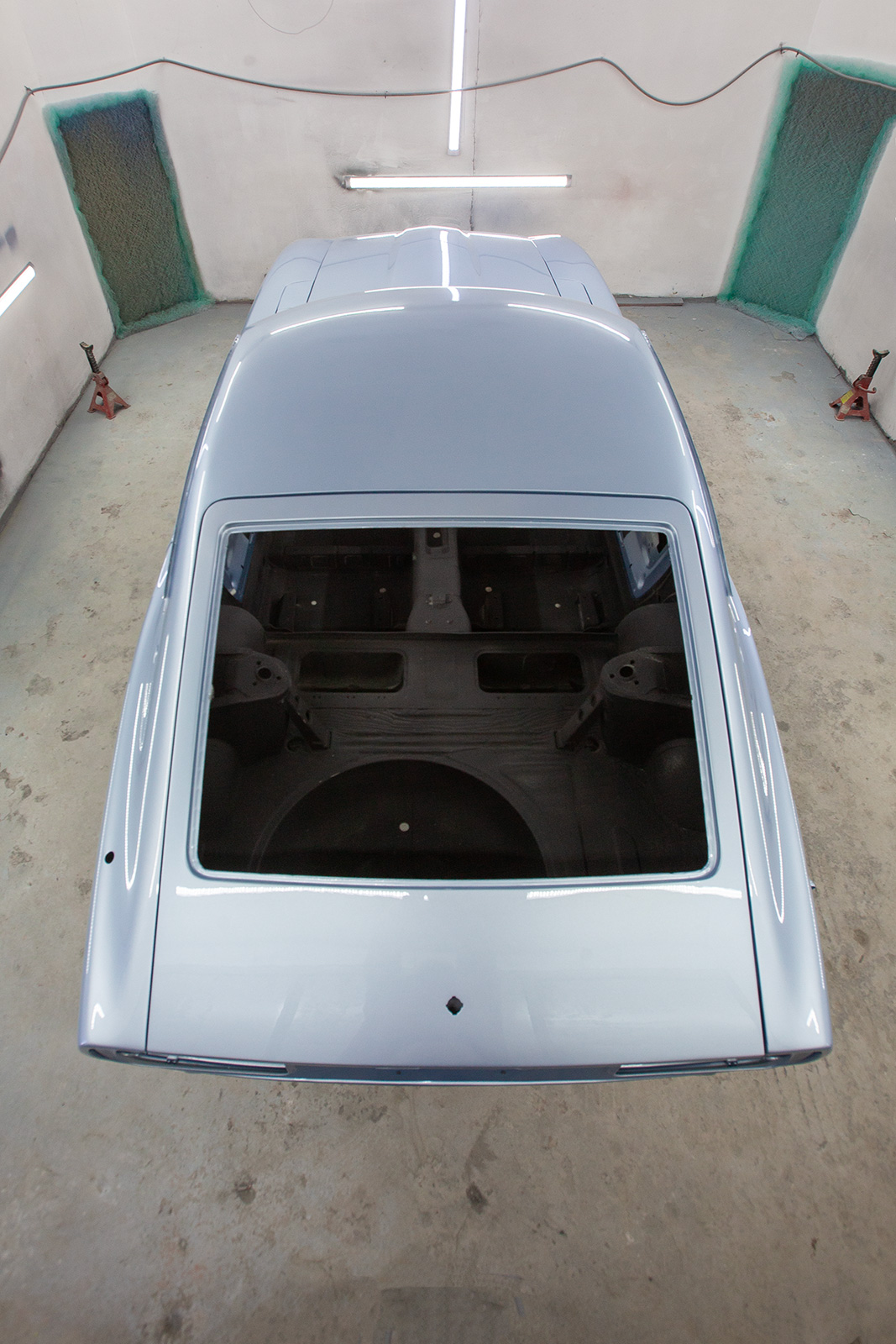
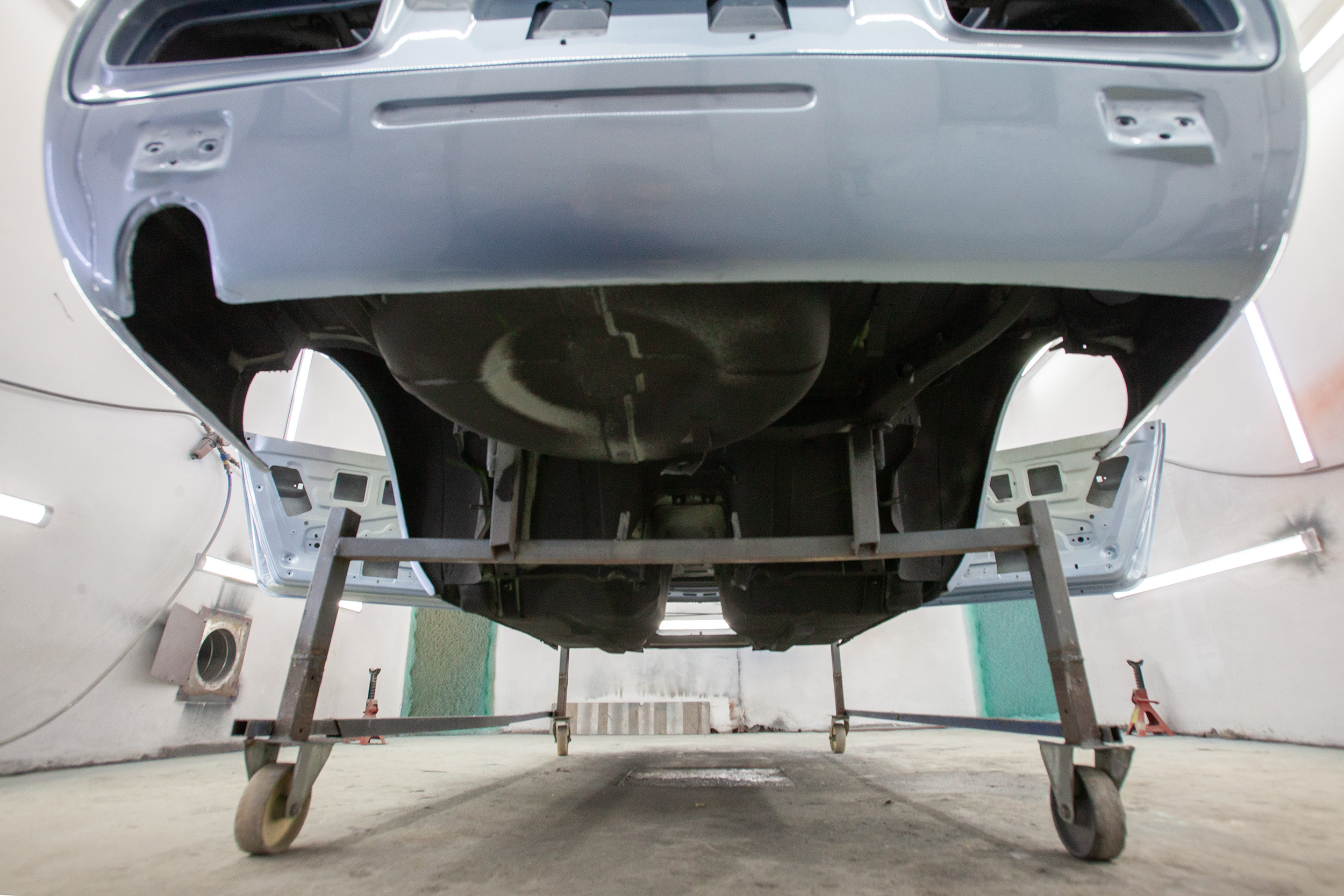
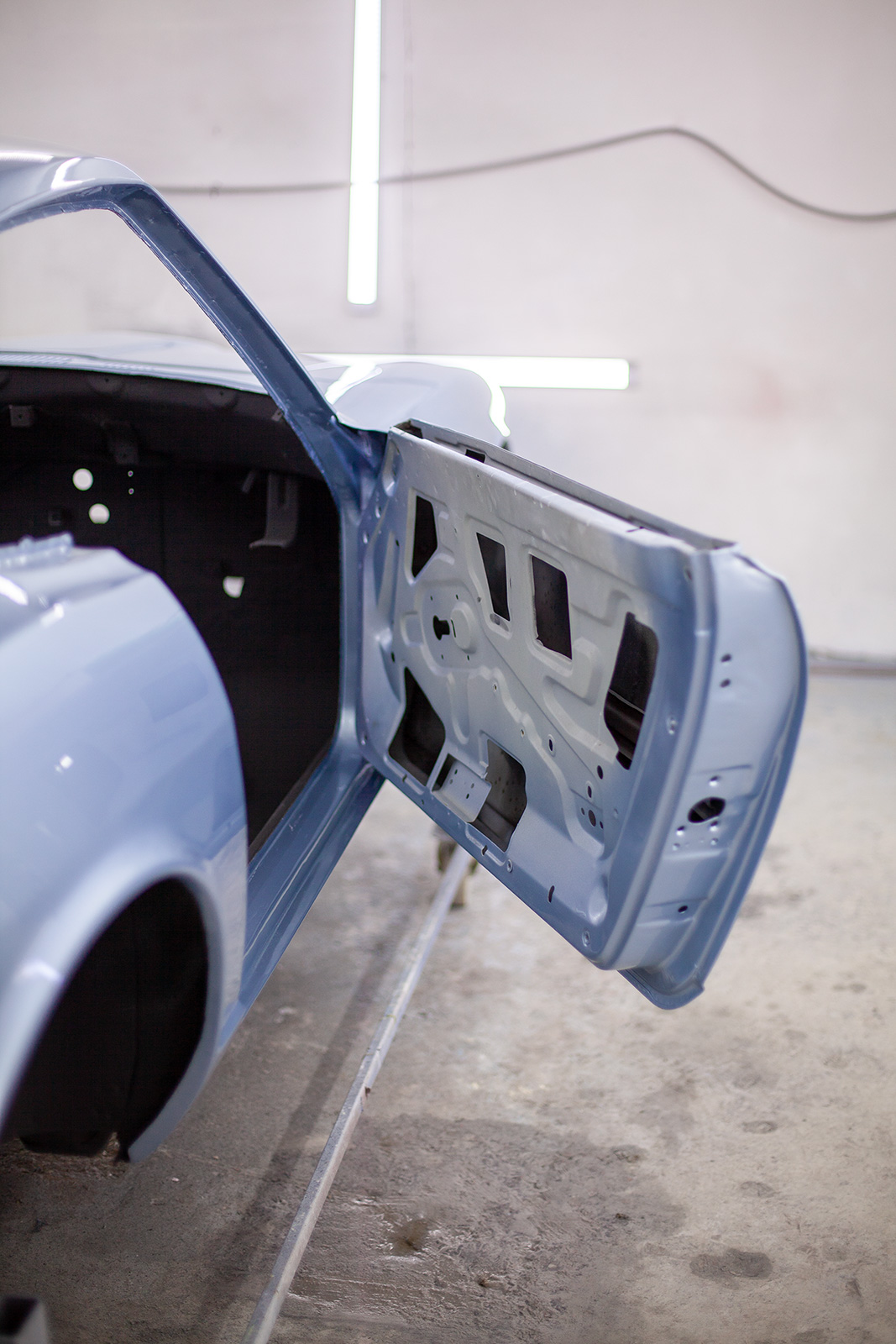
Chemical strippers and angle grinders leave residue. They clean the surface but they do not reveal it. Sandblasting — properly applied — is the only method that removes every trace of old paint, filler, underseal, and surface rust to expose clean, honest steel. The entire Datsun 240Z body is blasted: exterior panels, interior surfaces, door jambs, engine bay, and the complete underside. Nowhere is left untouched.
The blasted Datsun 240Z shell tells a story no other process can match: hairline cracks in seams, previous repair edges, areas of pitting in the steel, and the precise extent of rust perforation. It is only when raw metal is visible everywhere simultaneously that the full picture emerges — and it is this picture that drives every subsequent repair decision. A sandblasted shell cannot hide anything. That is precisely the point.
Blasting media is selected with care. The outer skin panels of a Datsun 240Z require a different approach to the floor sections, and calibrating these decisions correctly — understanding how heat and abrasion interact with steel of this era and thickness — is something that comes from having done it many times. Too aggressive and thin panel steel distorts; too soft and scale remains in the pitting.


Panel Fabrication & Welding
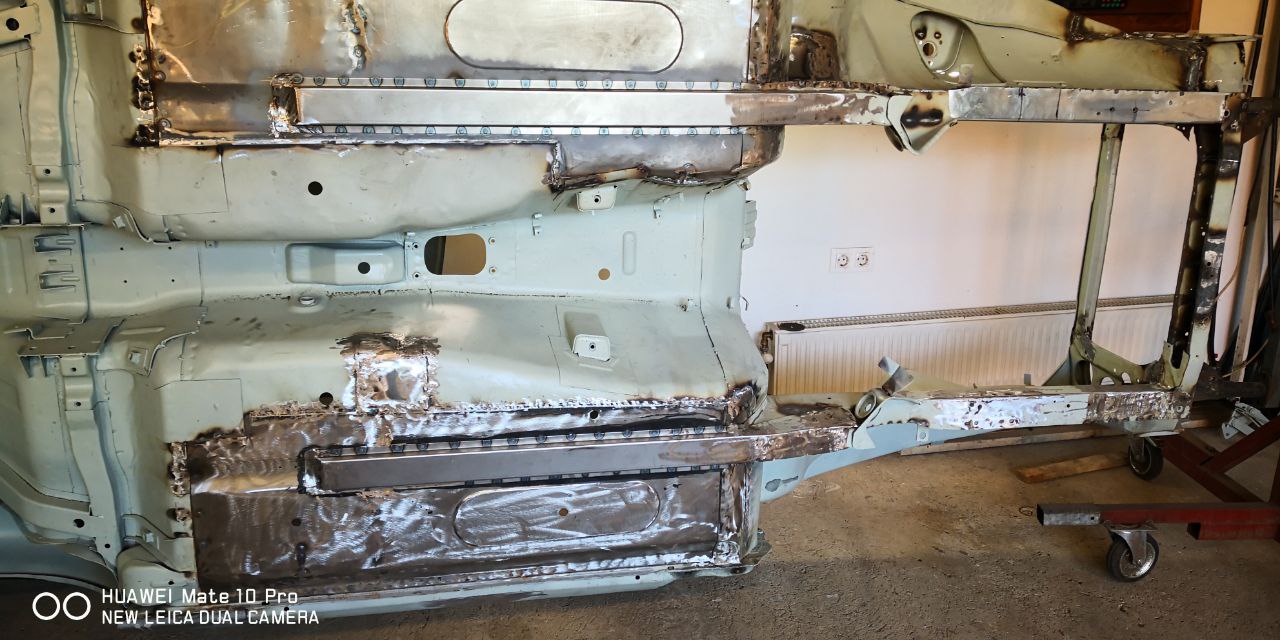
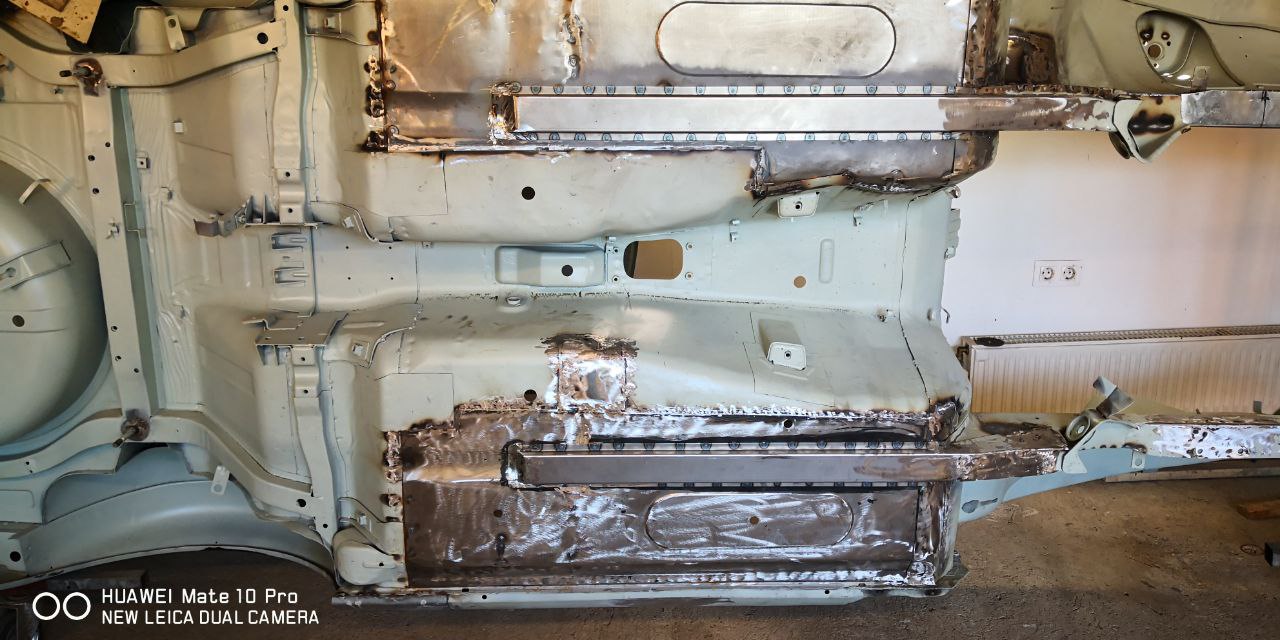
Rust rarely respects panel boundaries. On a Datsun 240Z that has lived for fifty years, sections of steel are not merely thinned or compromised — they are absent. In those areas there is only one correct response: cut out the affected metal entirely and weld in fresh steel. This is where the restoration of a Datsun 240Z diverges absolutely from cosmetic repair, and it is where the most demanding and consequential work takes place.
New steel sections are shaped by hand to match factory geometry. Sill repairs, floor sections, inner arch repairs, A-pillar bases — each piece is formed, trial-fitted, adjusted, and fitted again before a single weld is laid. The Datsun 240Z S30 body is a monocoque structure. The floor, sills, and pillars are load-bearing elements of the chassis. A repair that is not geometrically correct is not, in any meaningful sense, a repair.
MIG welding is used for all structural work, with settings calibrated for the thin panel steel characteristic of this era. Heat management, tack welding sequences, and post-weld metal finishing all follow a process that has been refined across hundreds of cars and decades of hands-on experience.
"Filler has a place in finishing work. That place is managing minor surface variation — not concealing structural compromise. On every Datsun 240Z retailed by Bavaria Sports Cars, metal replaces metal."
Bavaria Sports Cars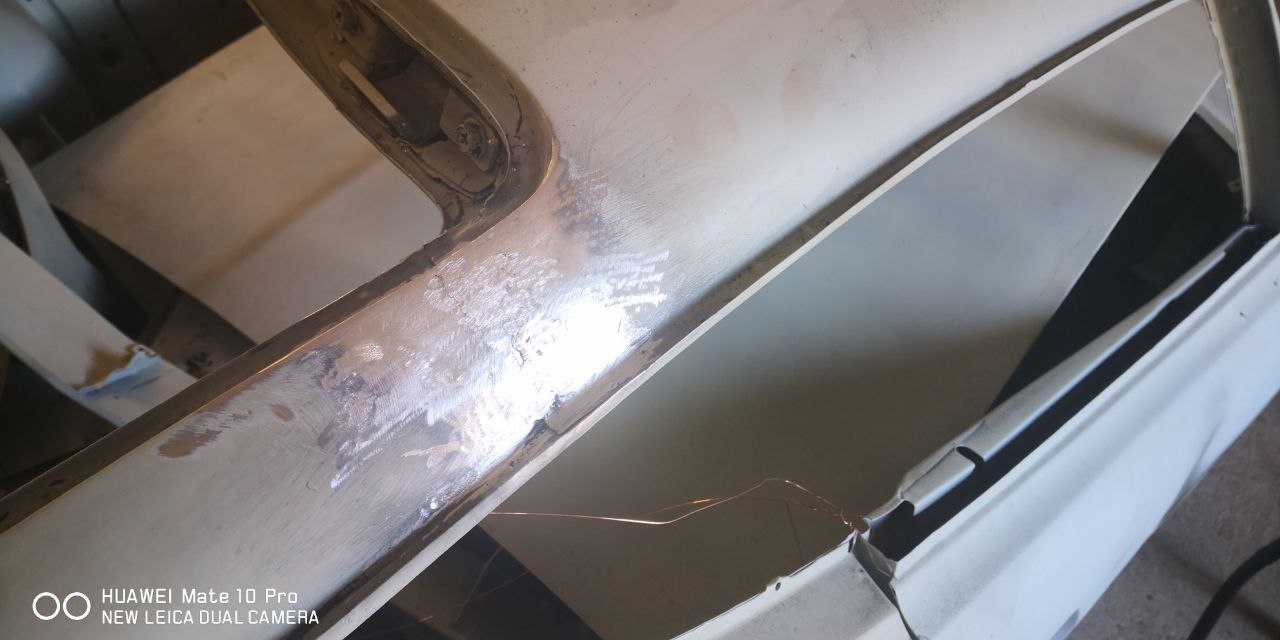
Epoxy Primer Throughout the Process
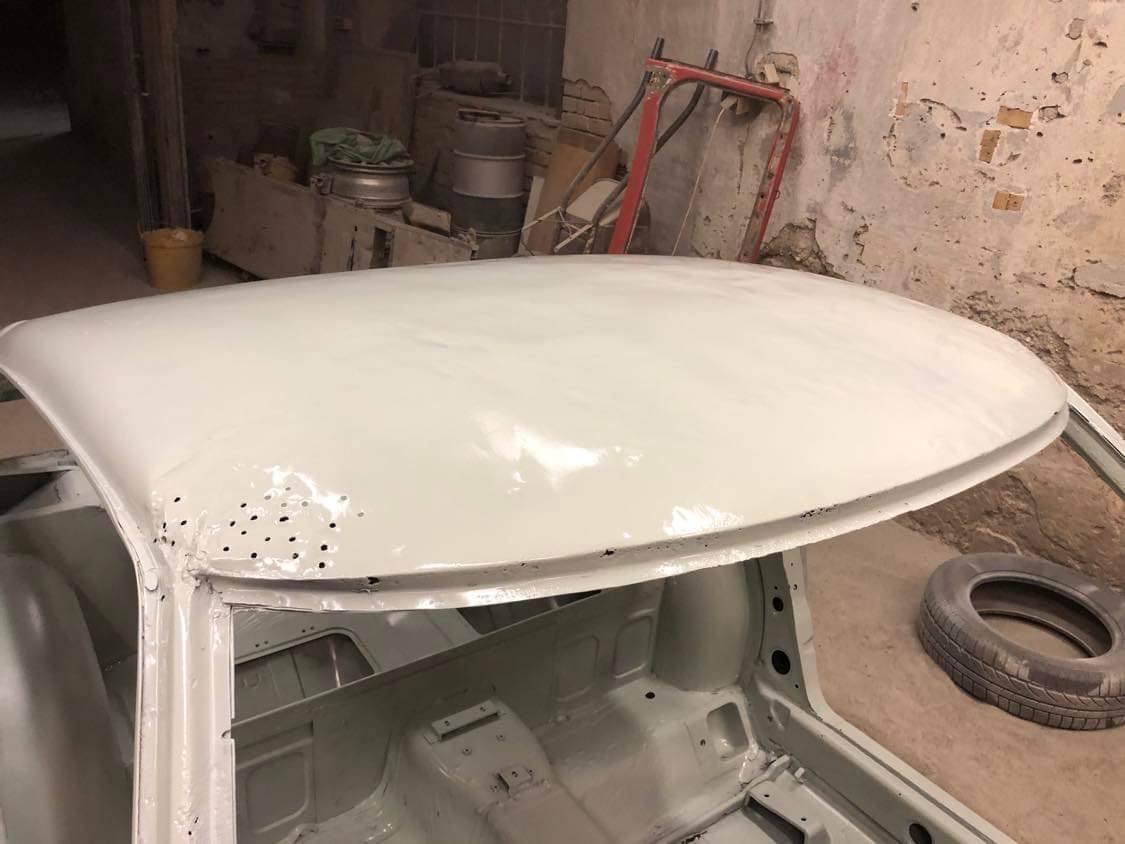
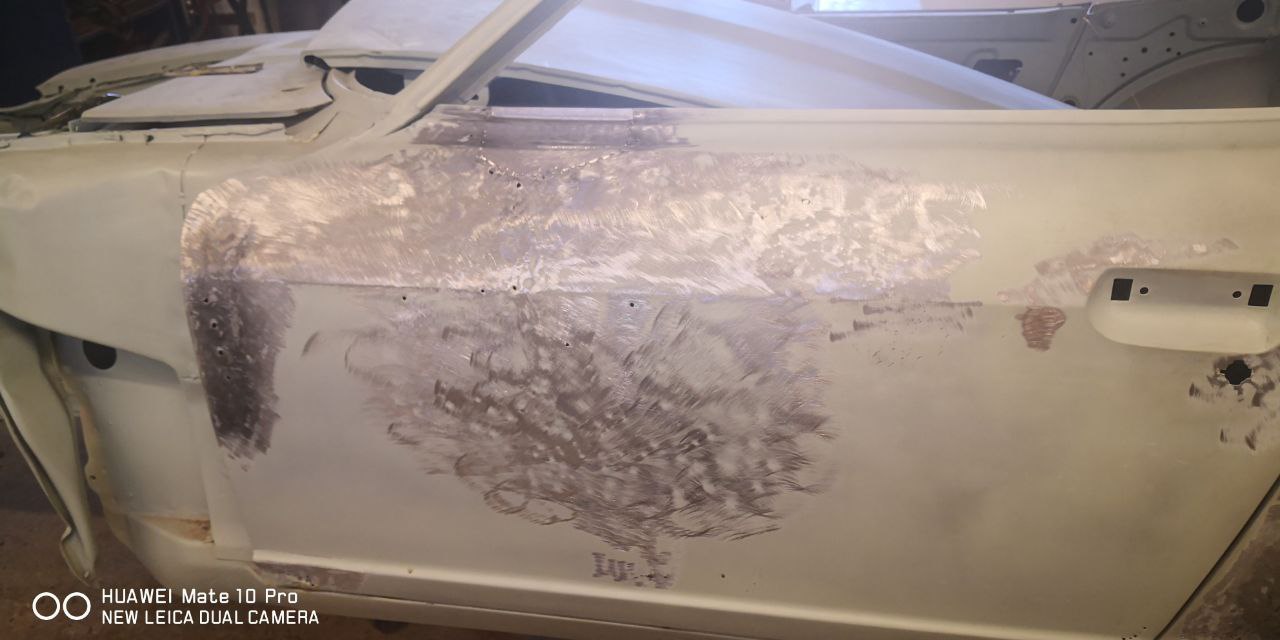
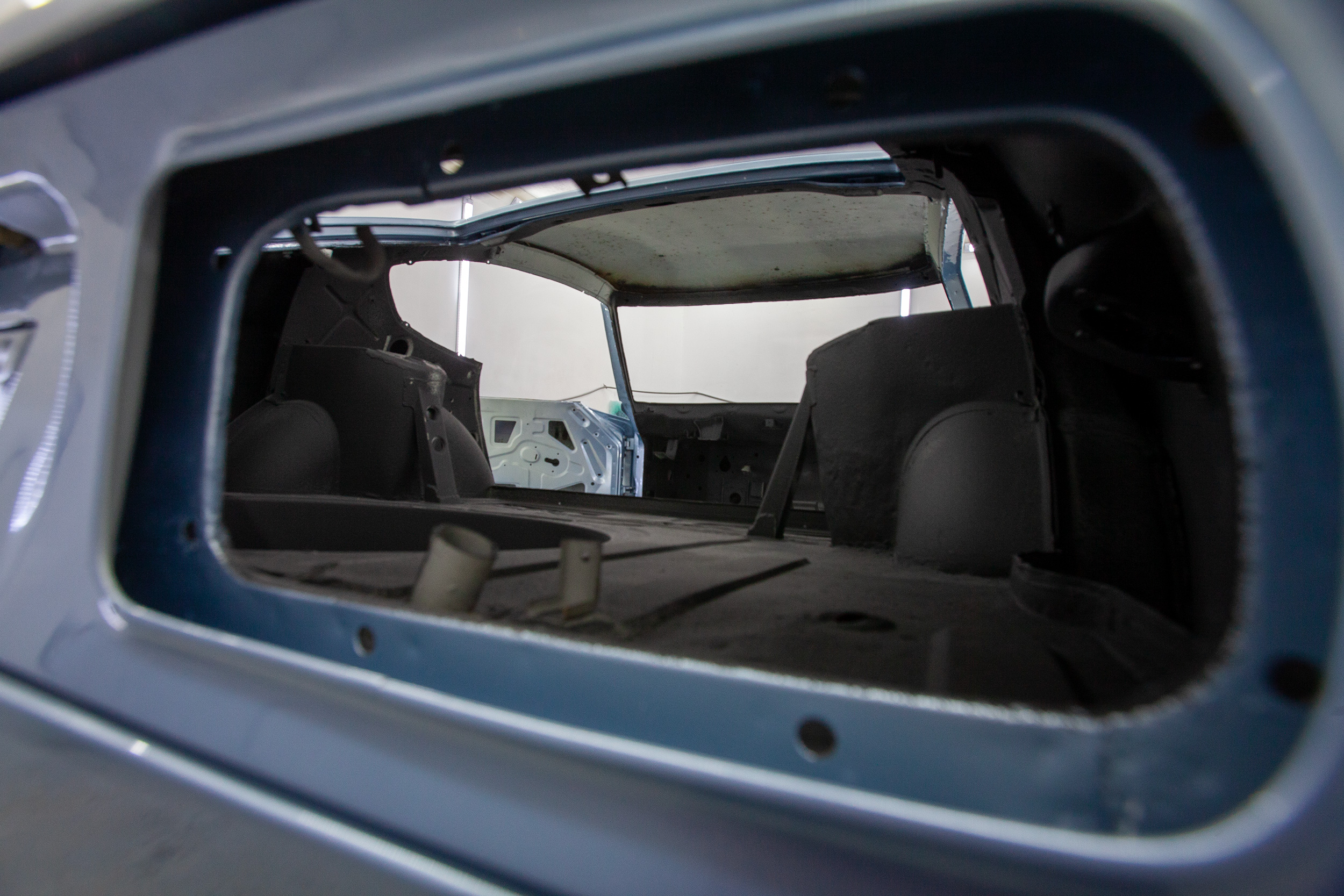
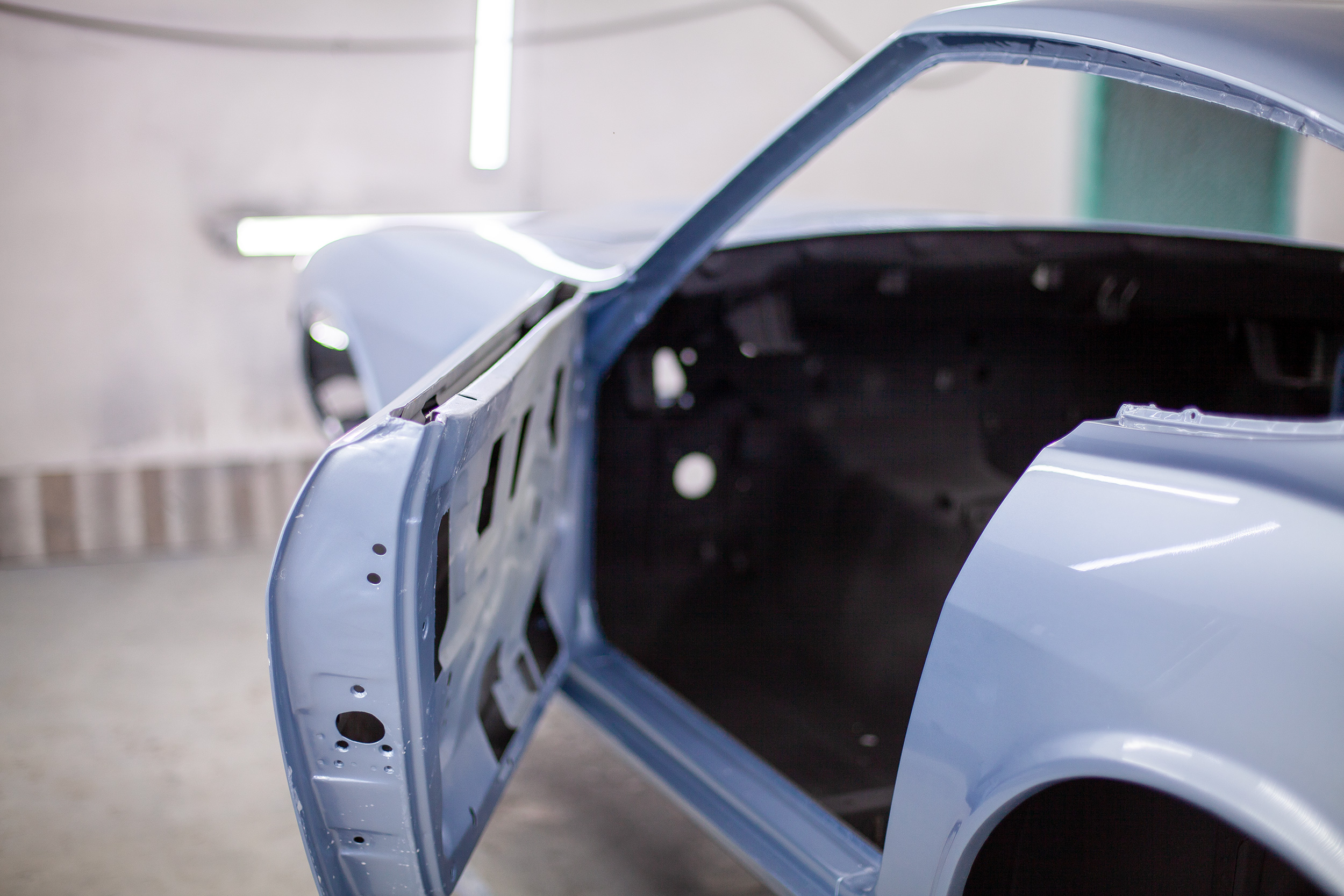
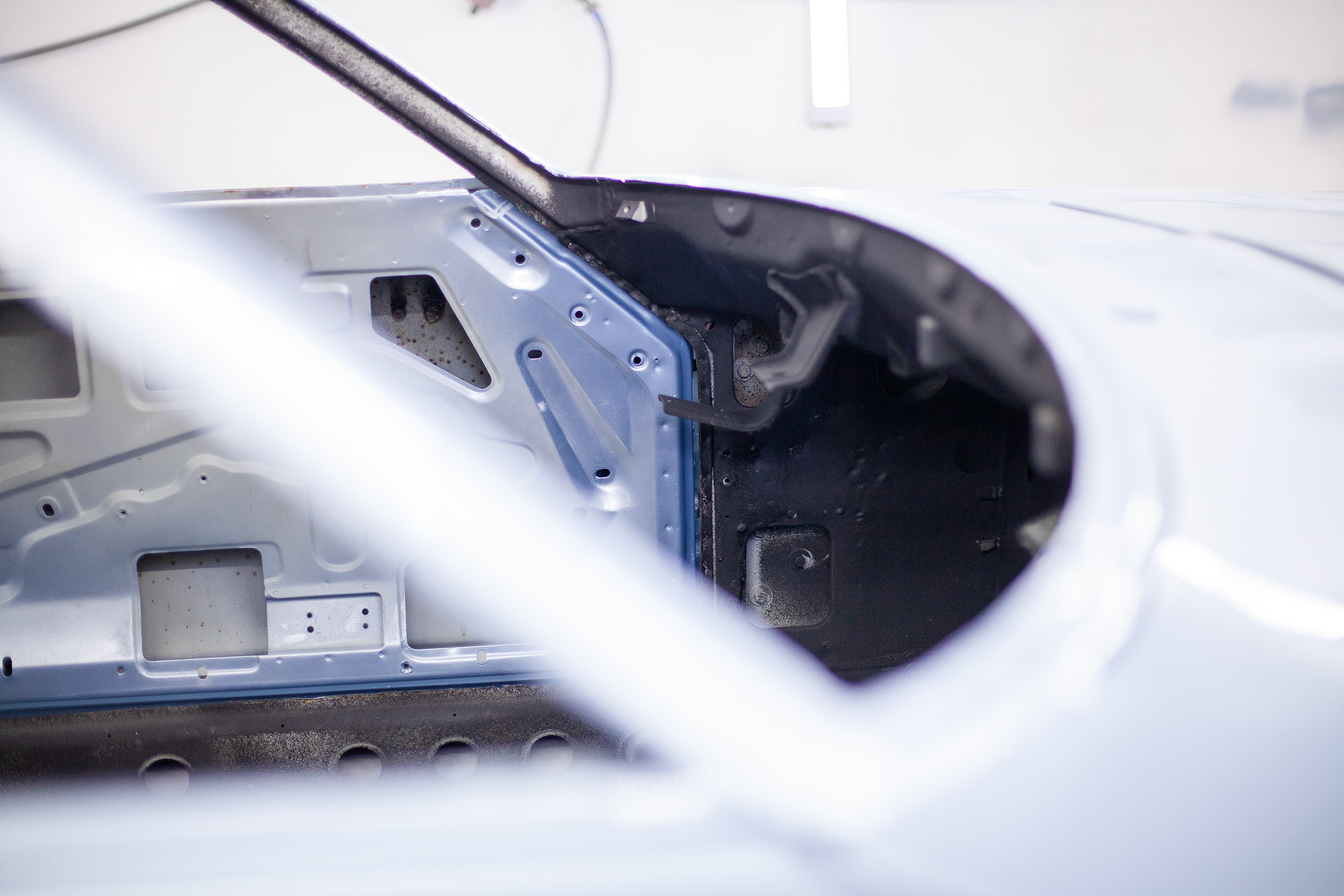
Priming is not a final step — it is an ongoing one. The moment bare metal is exposed, oxidation begins. A sandblasted Datsun 240Z shell left overnight without protection will show the first signs of surface rust by morning. Epoxy primer is therefore applied to completed sections as work progresses throughout the fabrication stage, sealing freshly worked metal against the atmosphere before it has any opportunity to oxidise.
Epoxy primers bond directly to clean steel with exceptional adhesion and form a chemically resistant barrier that later coatings cannot replicate on their own. Applied correctly to a properly prepared surface, the epoxy layer becomes a permanent component of the Datsun 240Z's protection — invisible beneath everything that follows, but active against moisture intrusion for the life of the car.
On internal cavities — inner sills, box sections, and areas permanently enclosed on reassembly — professional-grade cavity wax treatment is applied. These products penetrate every seam and corner, displacing moisture and coating surfaces that brush or spray could never reach. The result is that the corrosion eliminated from the Datsun 240Z during the earlier stages does not return.
Metal Finishing & Bodywork Preparation
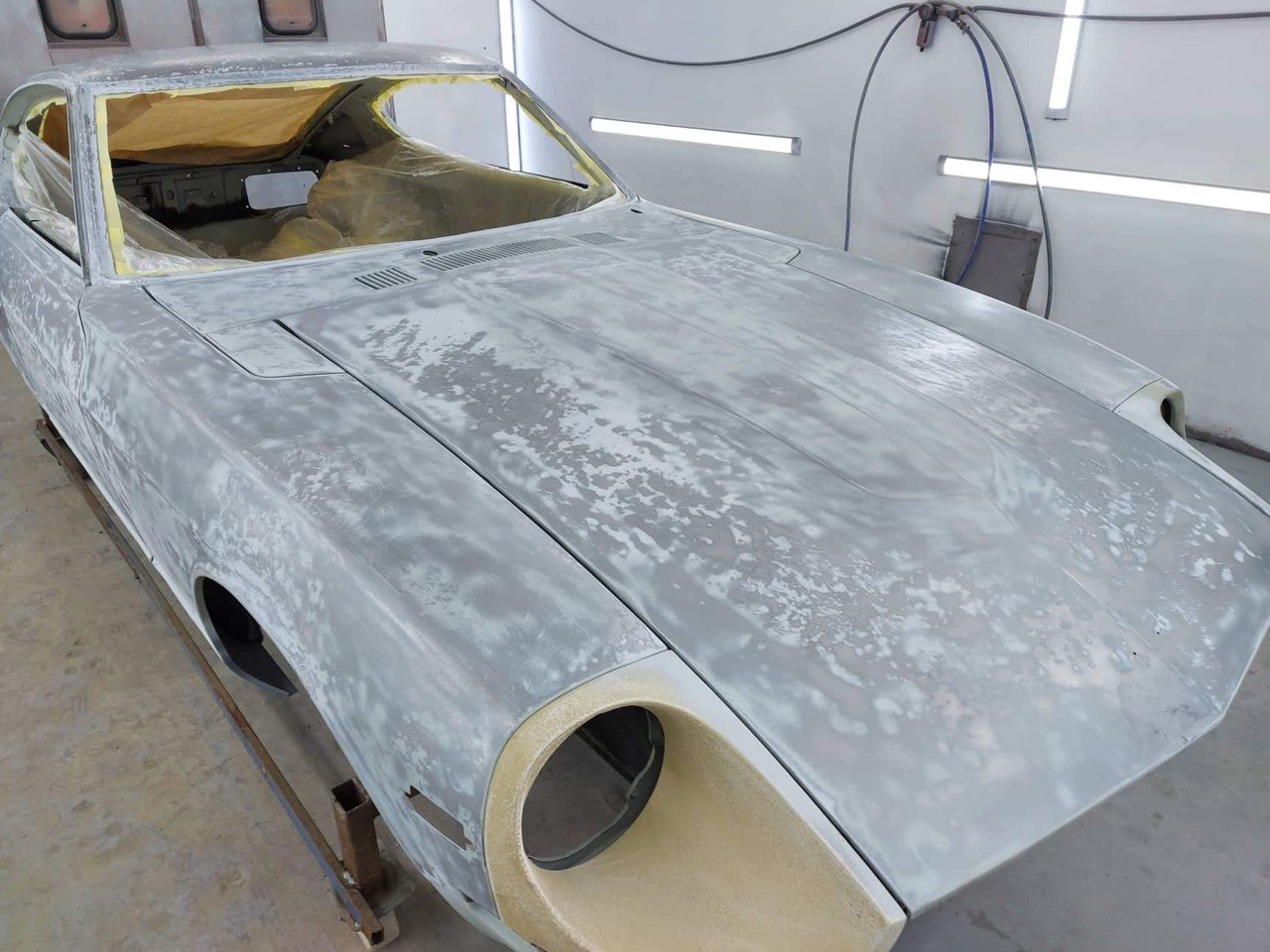
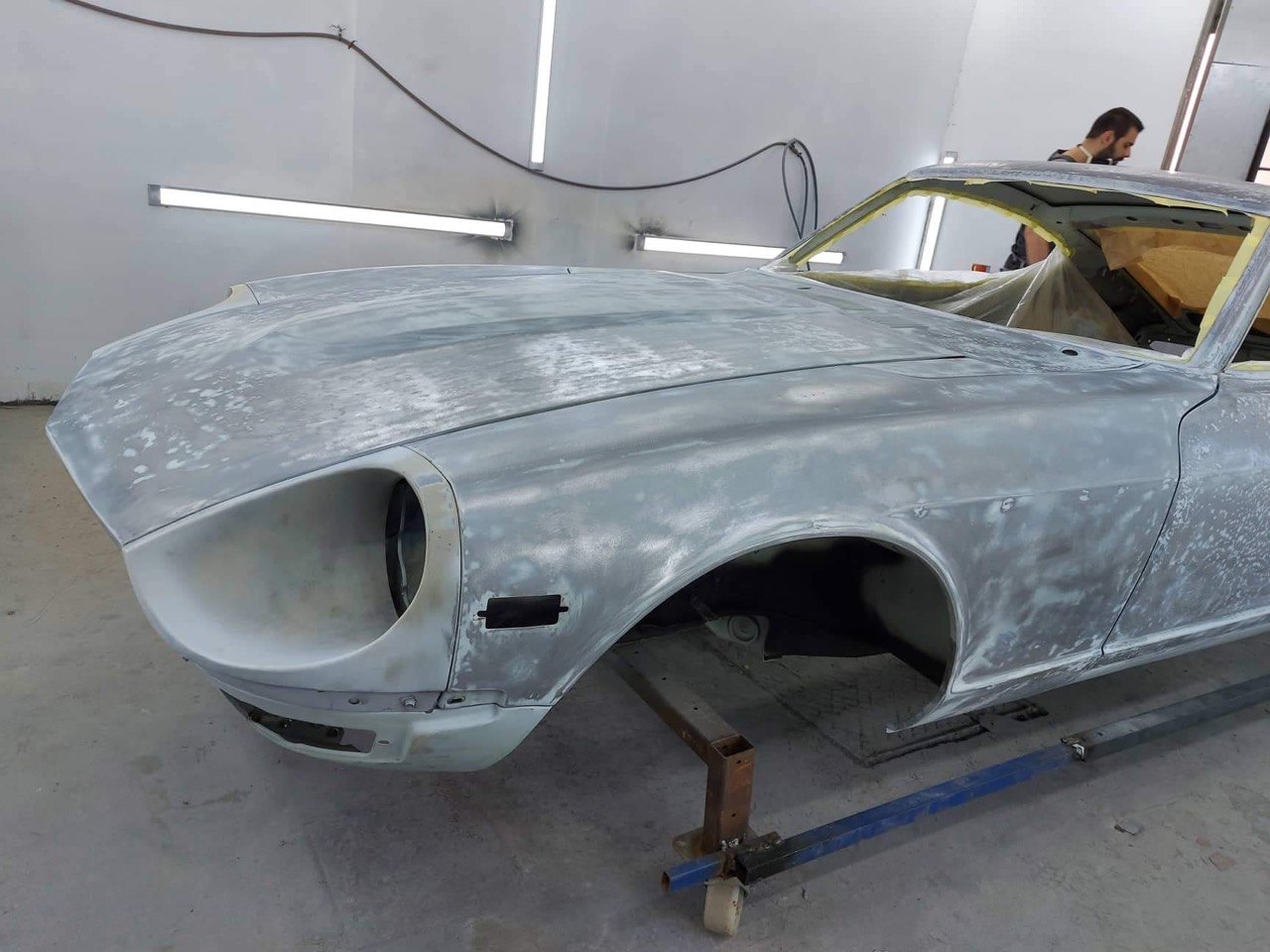
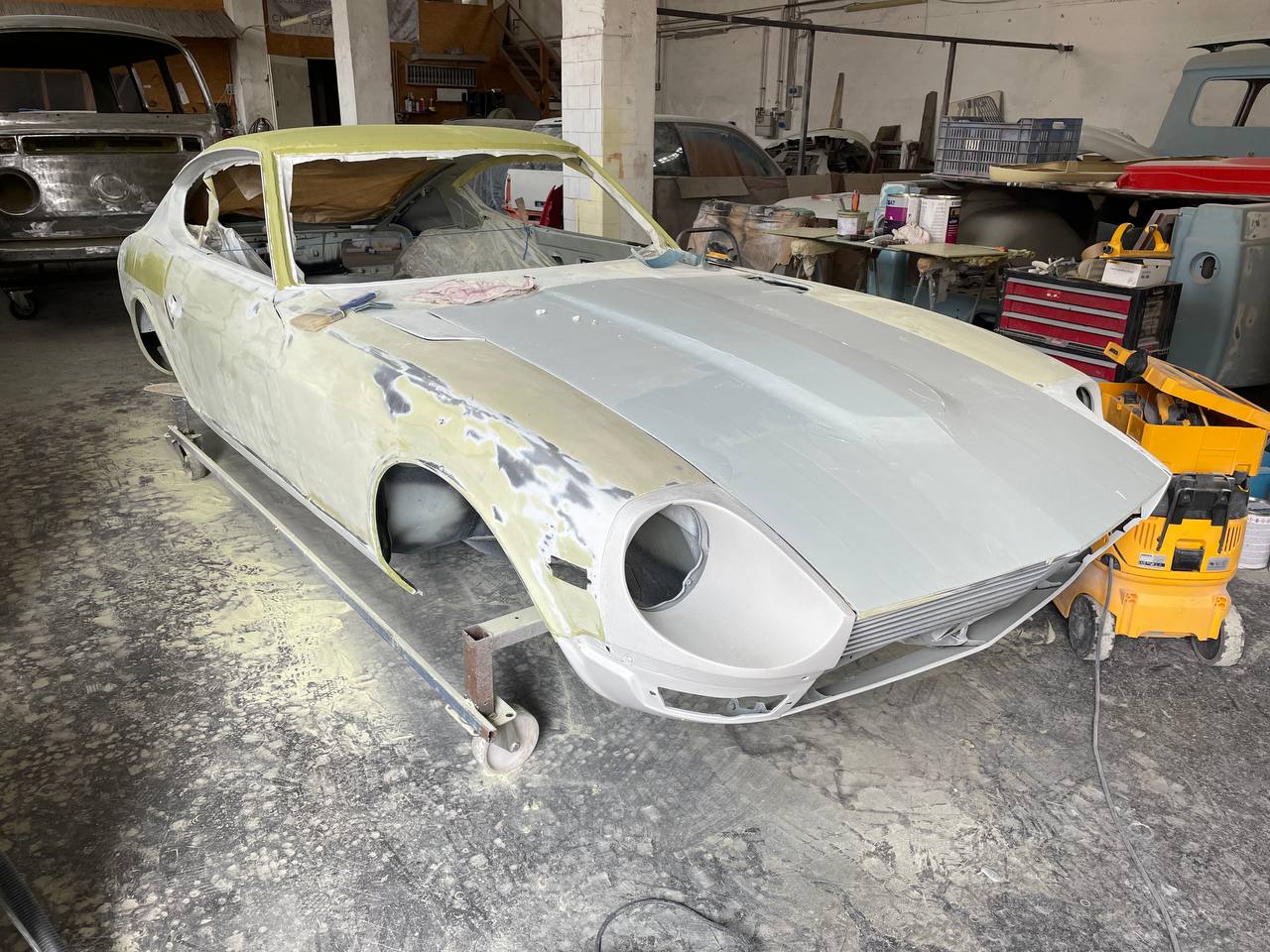
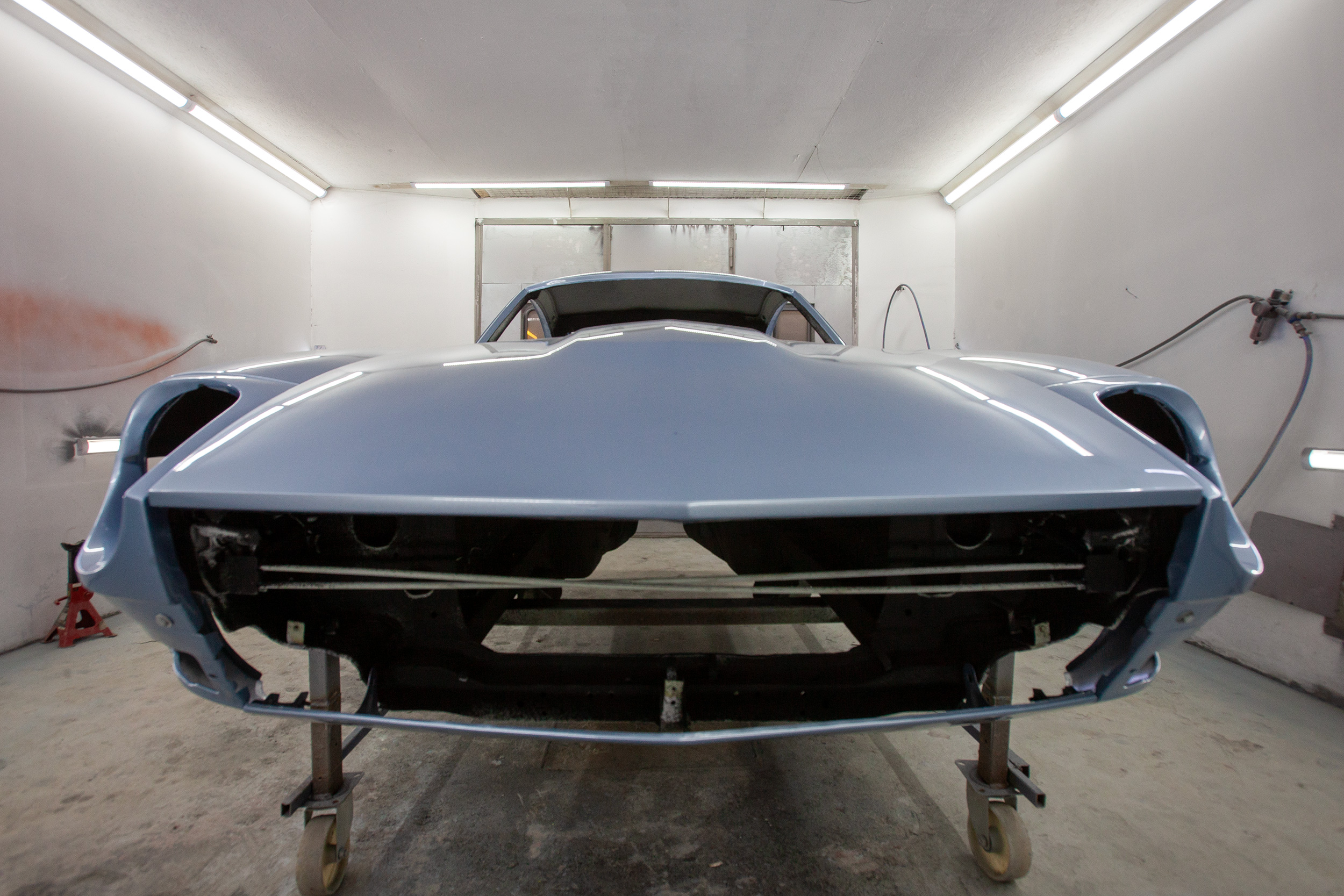
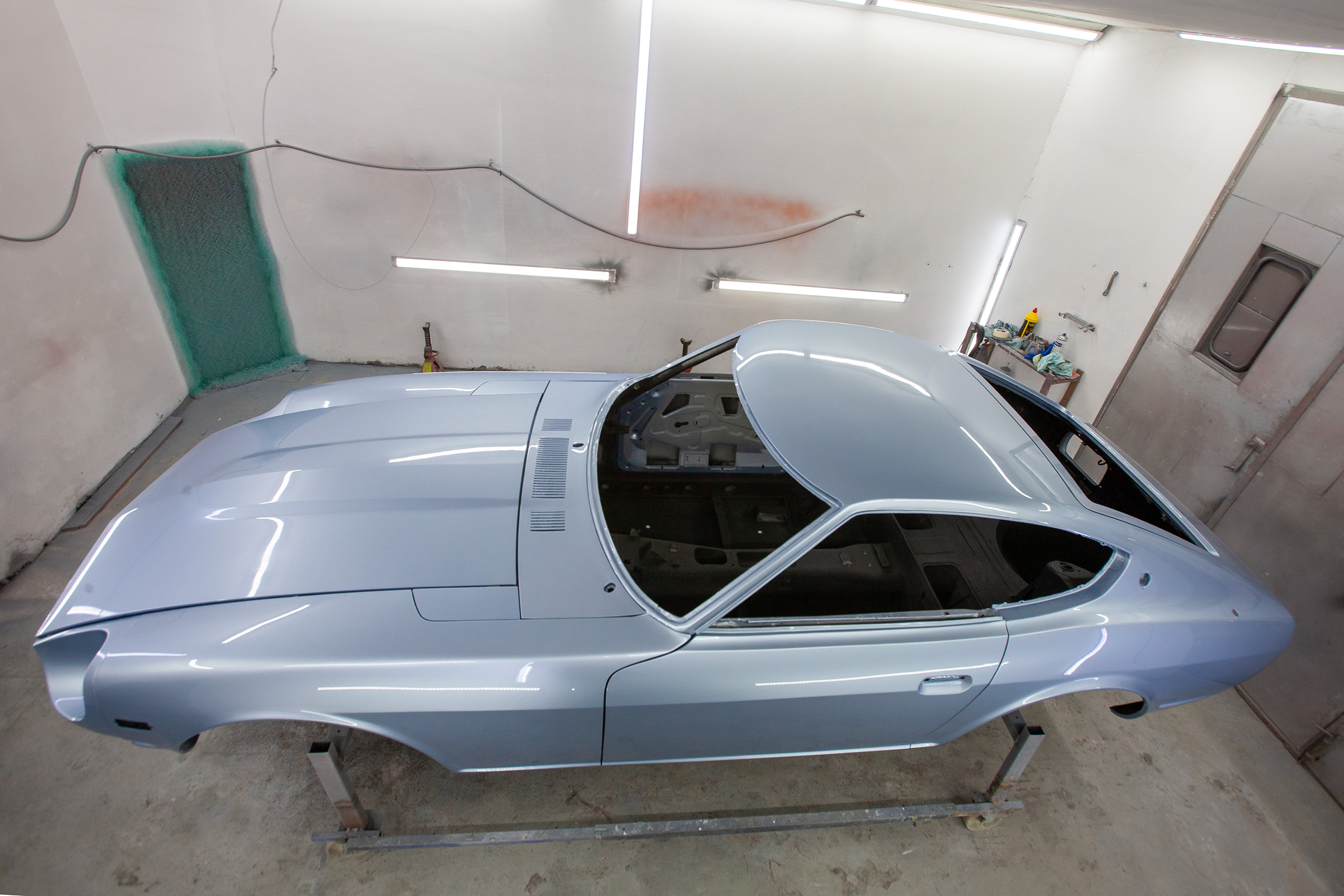
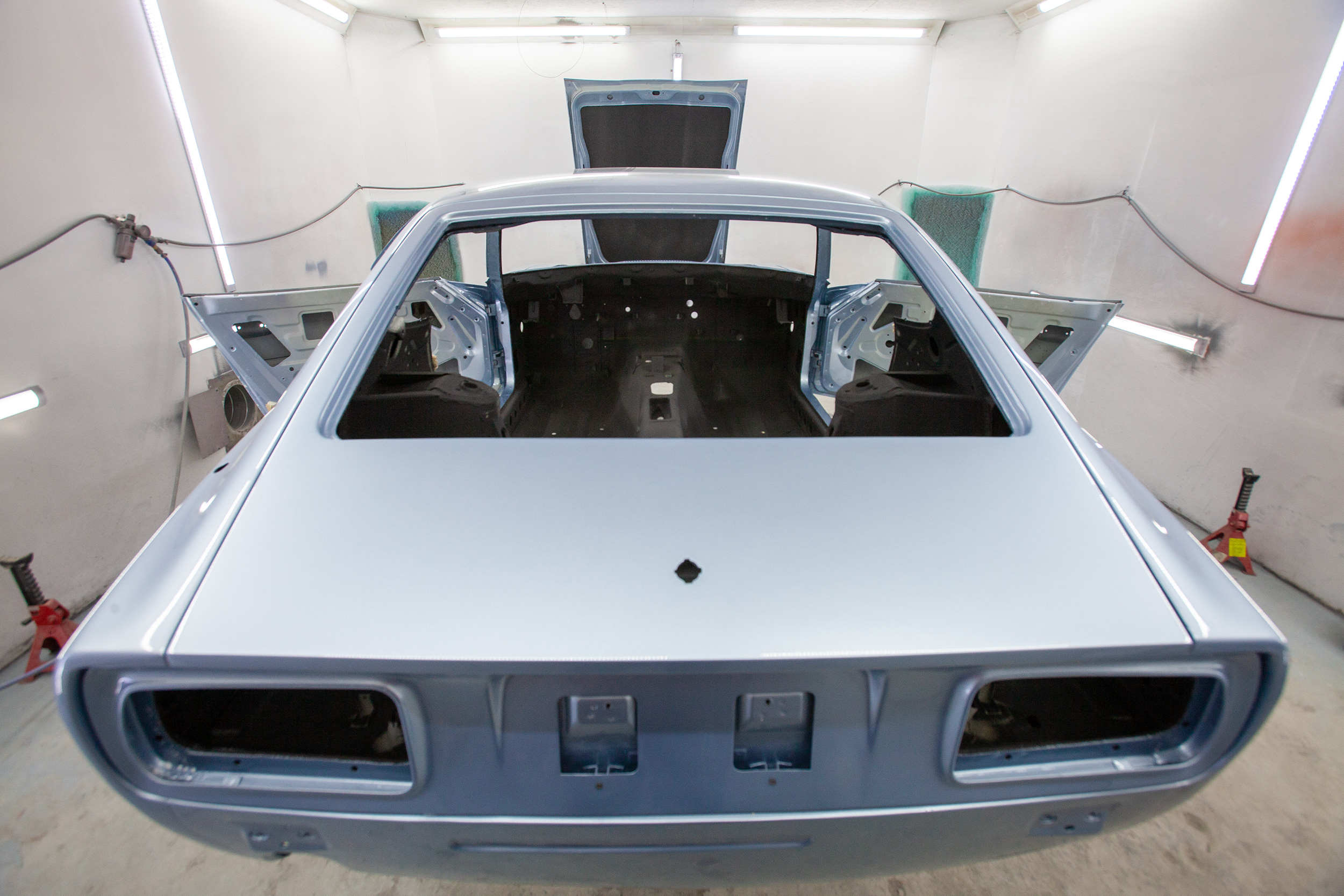
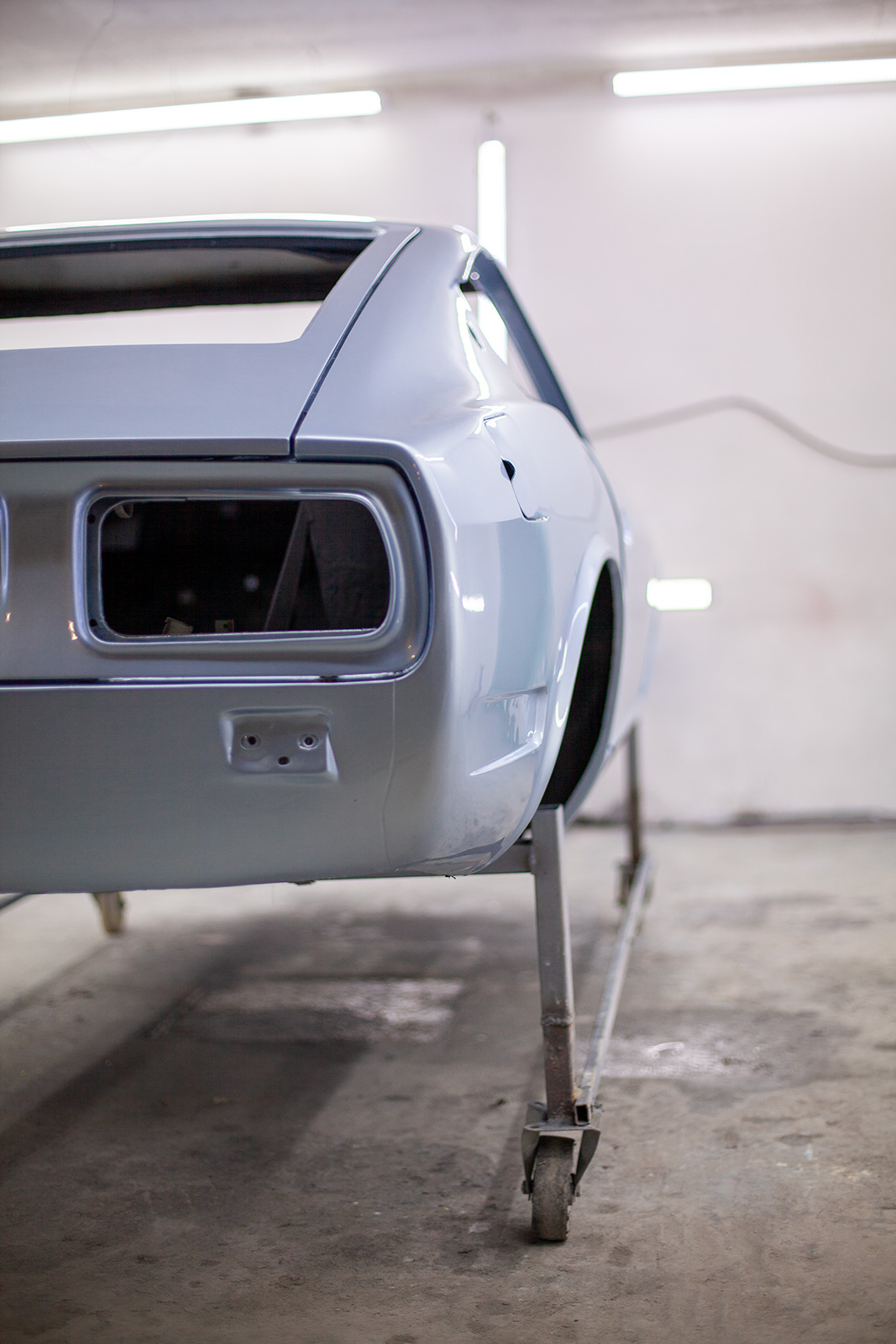
Once the welding is complete and all structural work has been verified, the Datsun 240Z moves to metal finishing. This is the process of achieving a surface that is geometrically correct, free of heat distortion from welding, and ready to accept the paint system. Welded seams are dressed and blended. Panel gaps are set and checked. Shuts — bonnet, doors, rear hatch — are verified for consistency across the entire car.
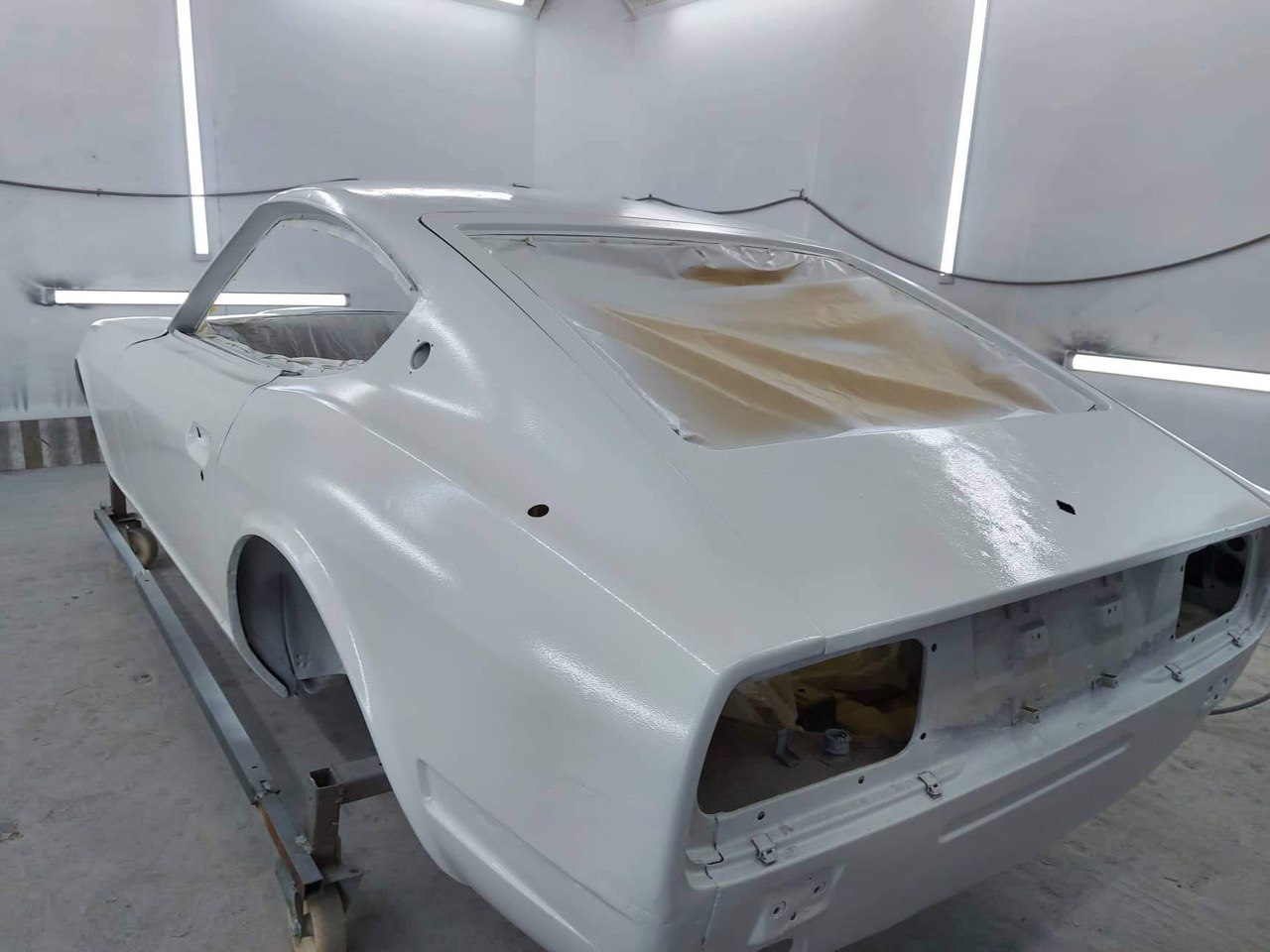
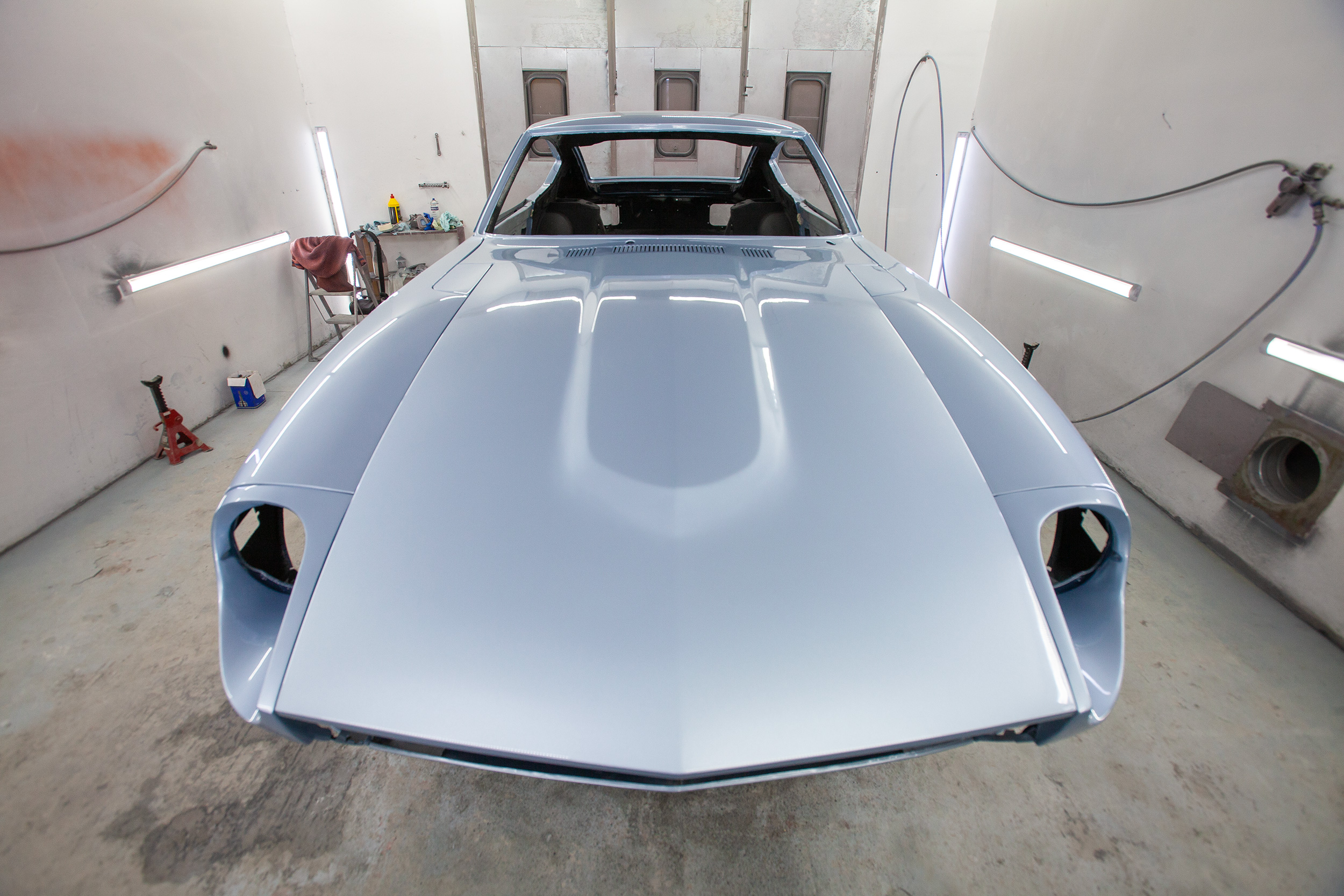
High-build surfacer is then applied in multiple coats and progressively flatted between layers, creating the uniform foundation that Glasurit topcoats require. Each coat is flatted by hand. The process is time-consuming and entirely without shortcut — which is why the finished surface has the quality it does.
Multi-Stage Glasurit Paint System
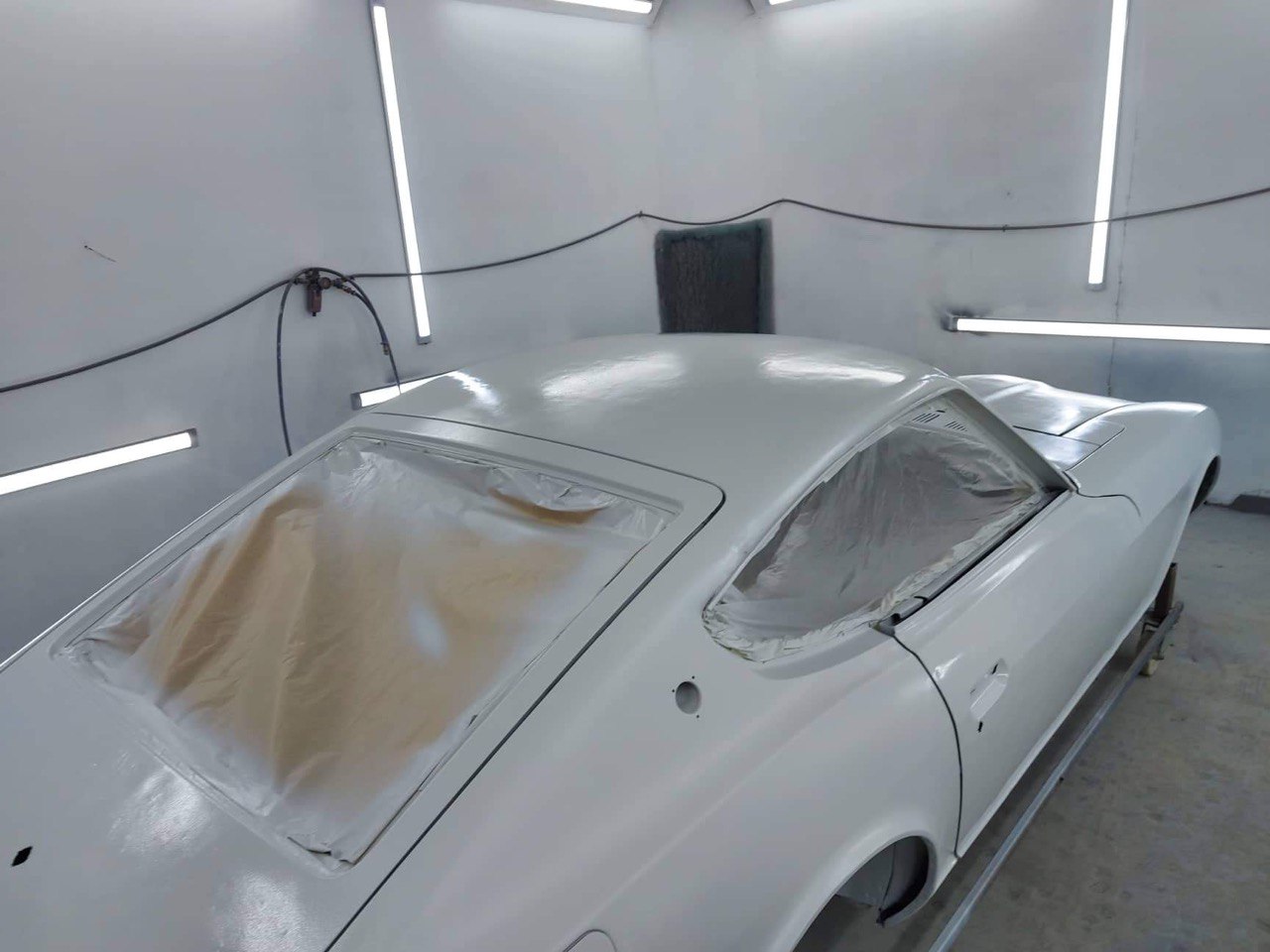
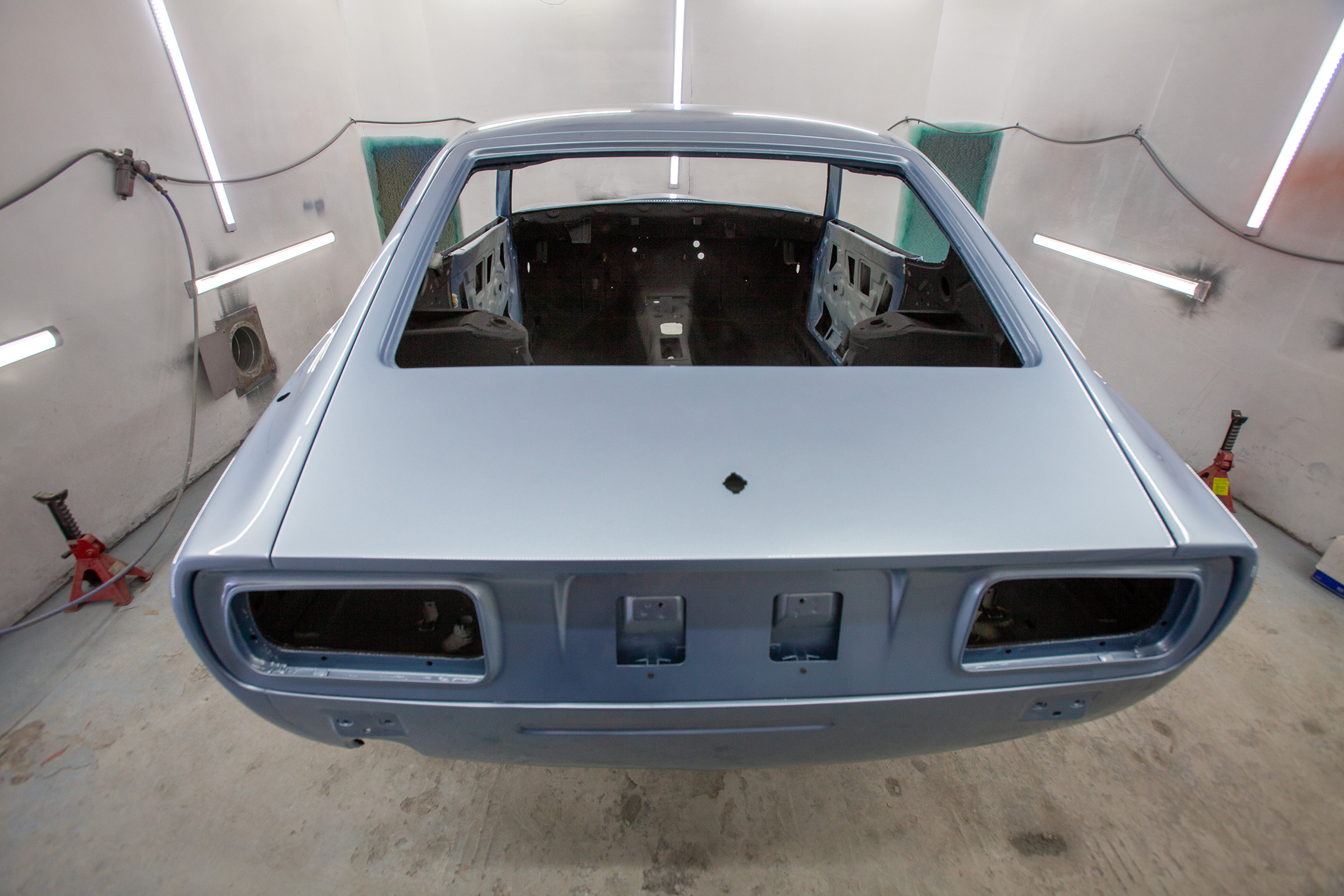
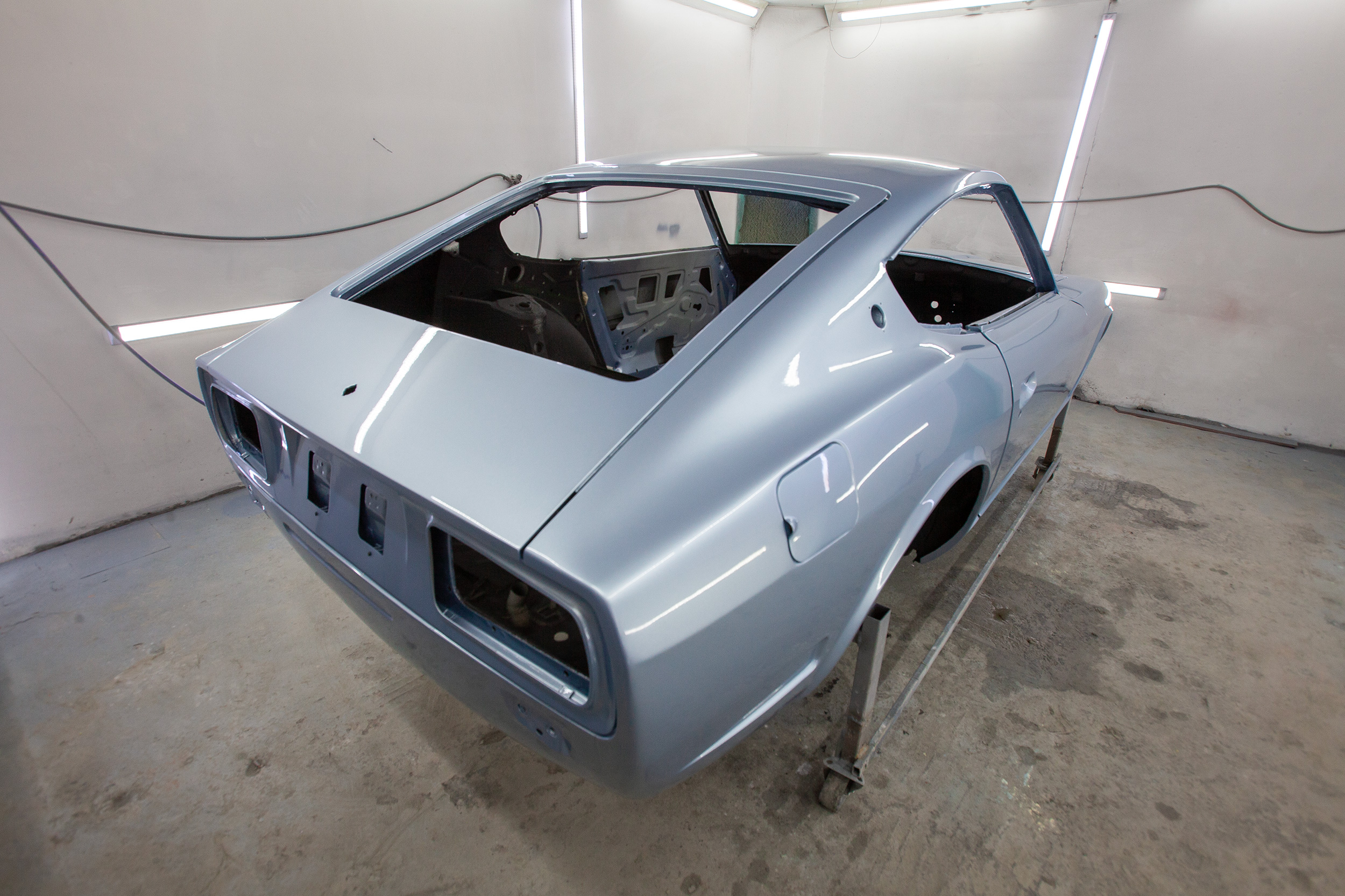
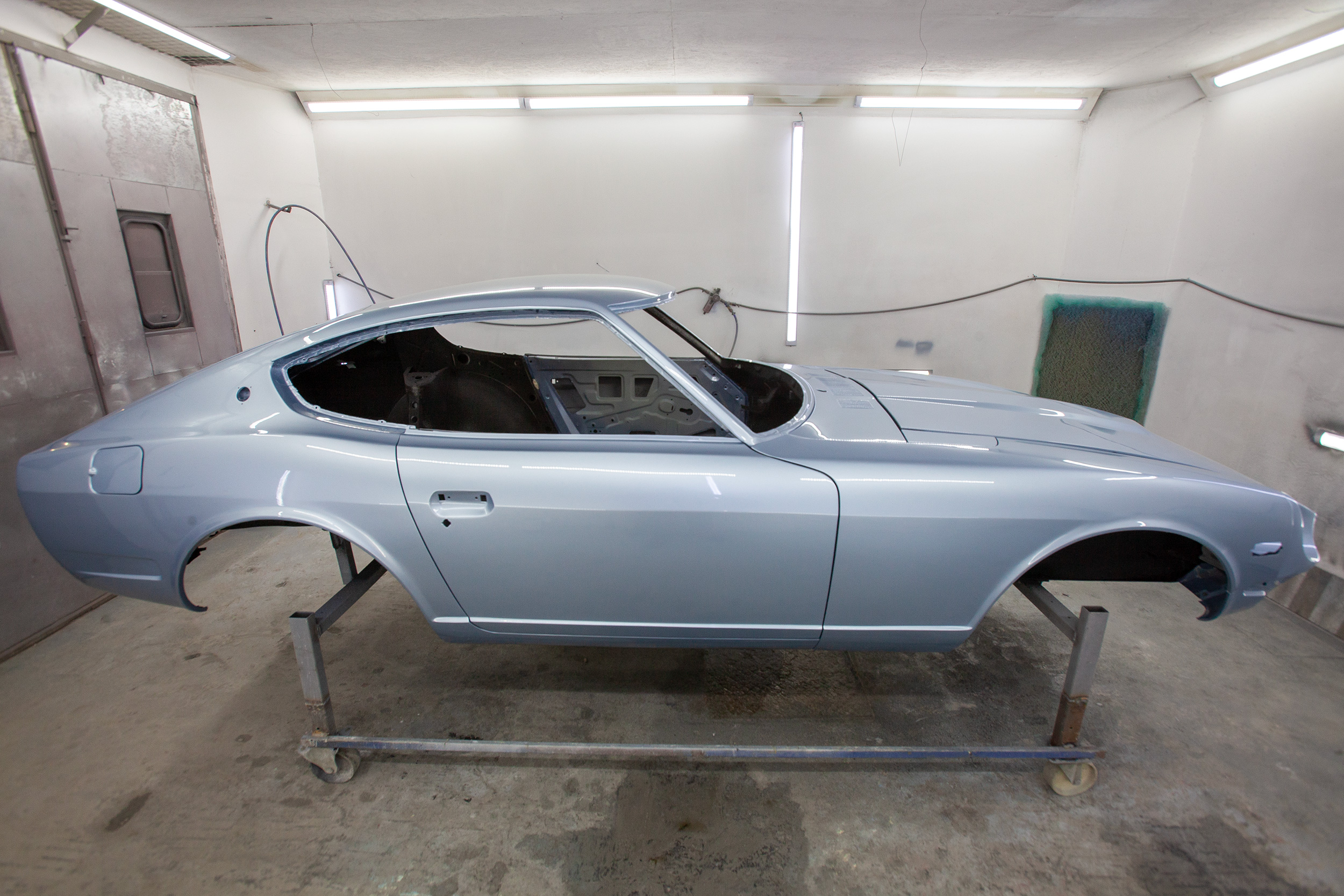
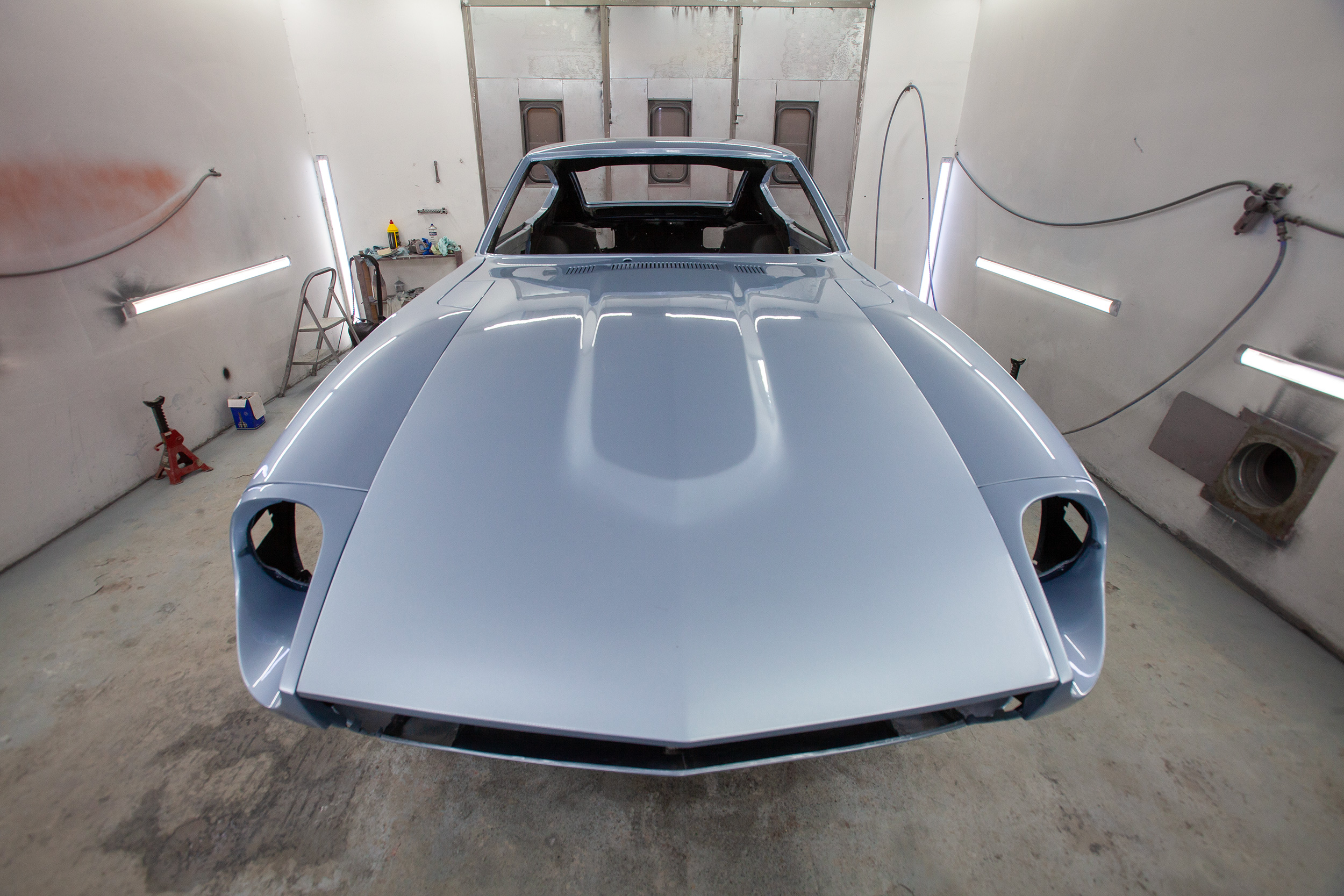
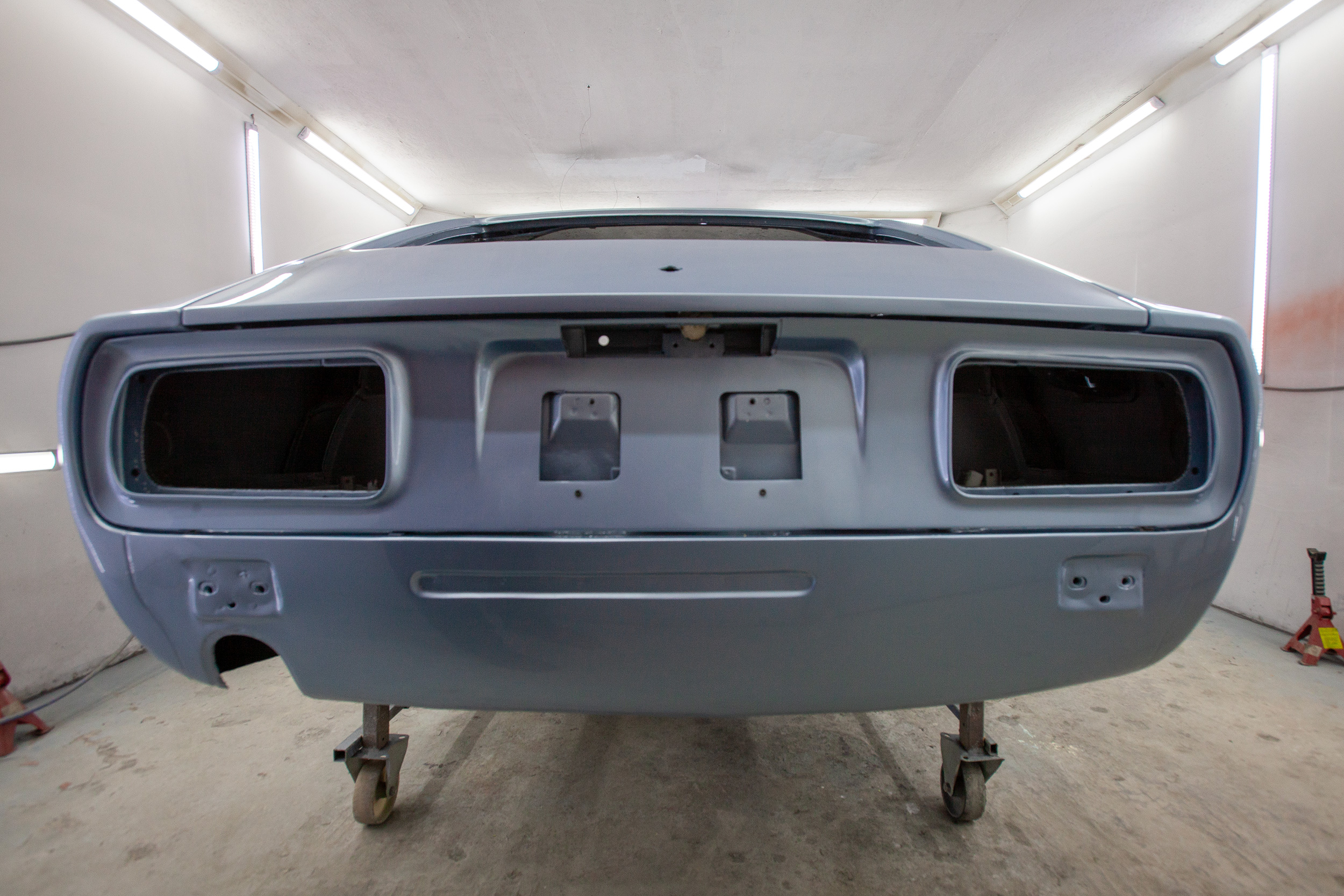
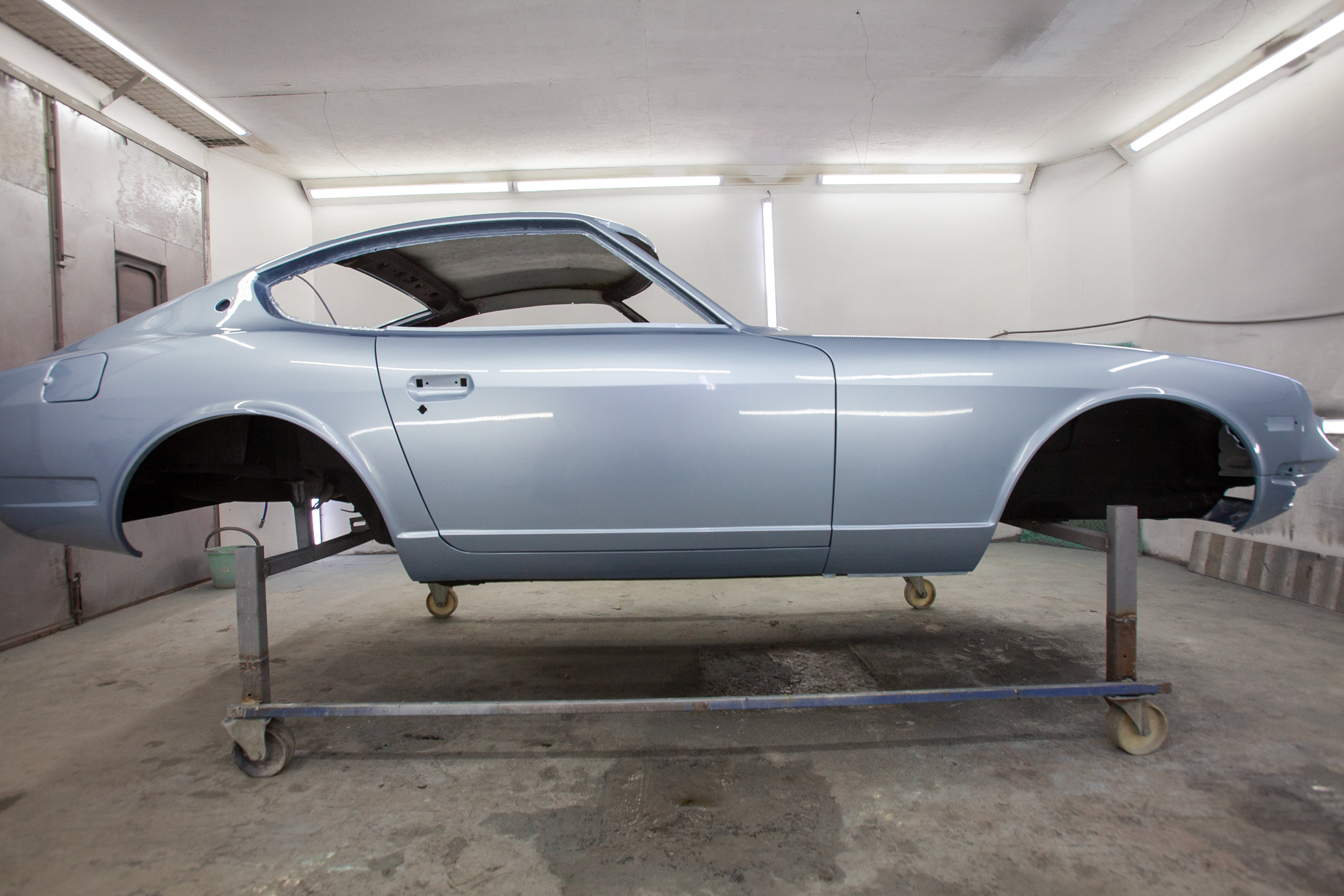
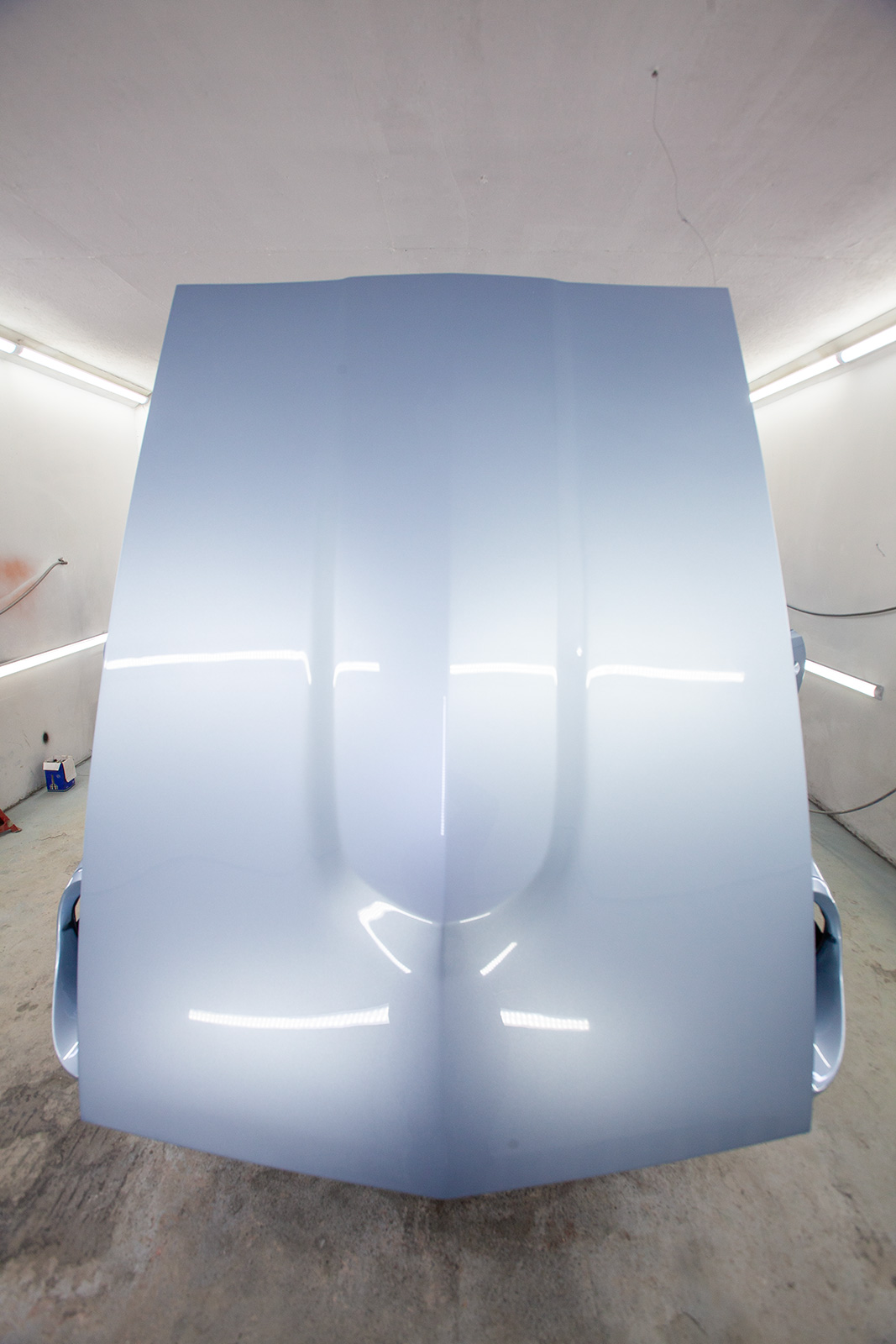
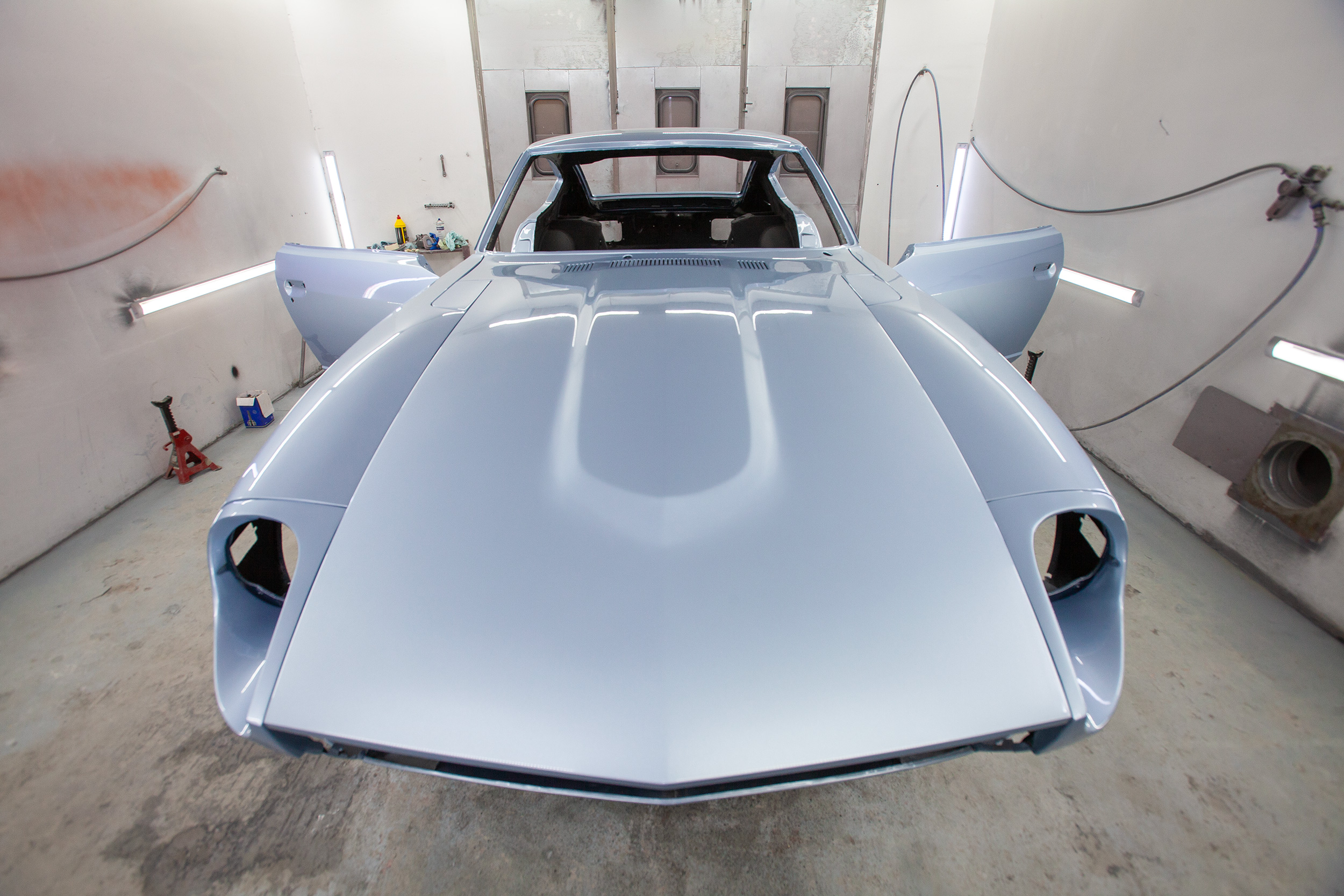
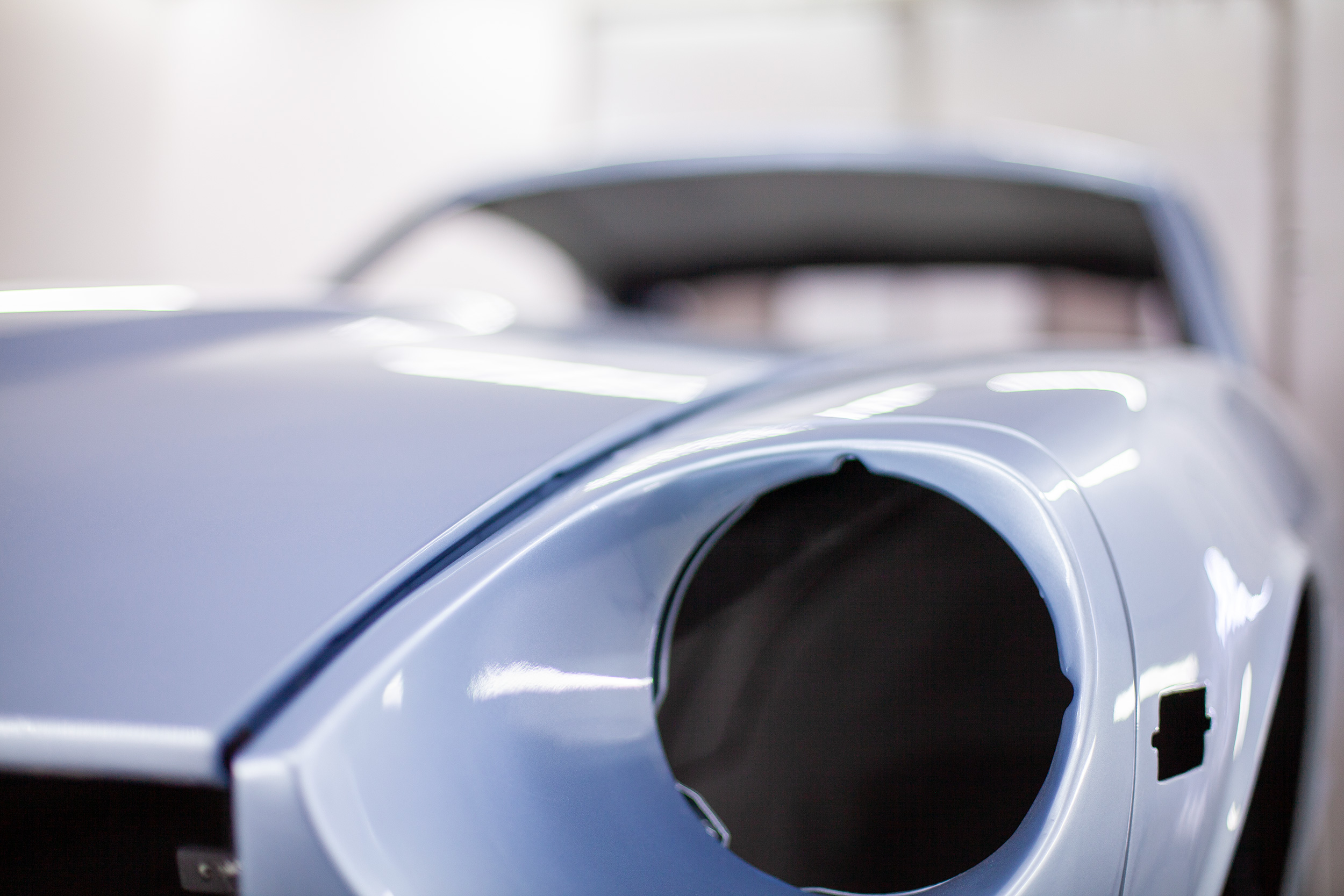
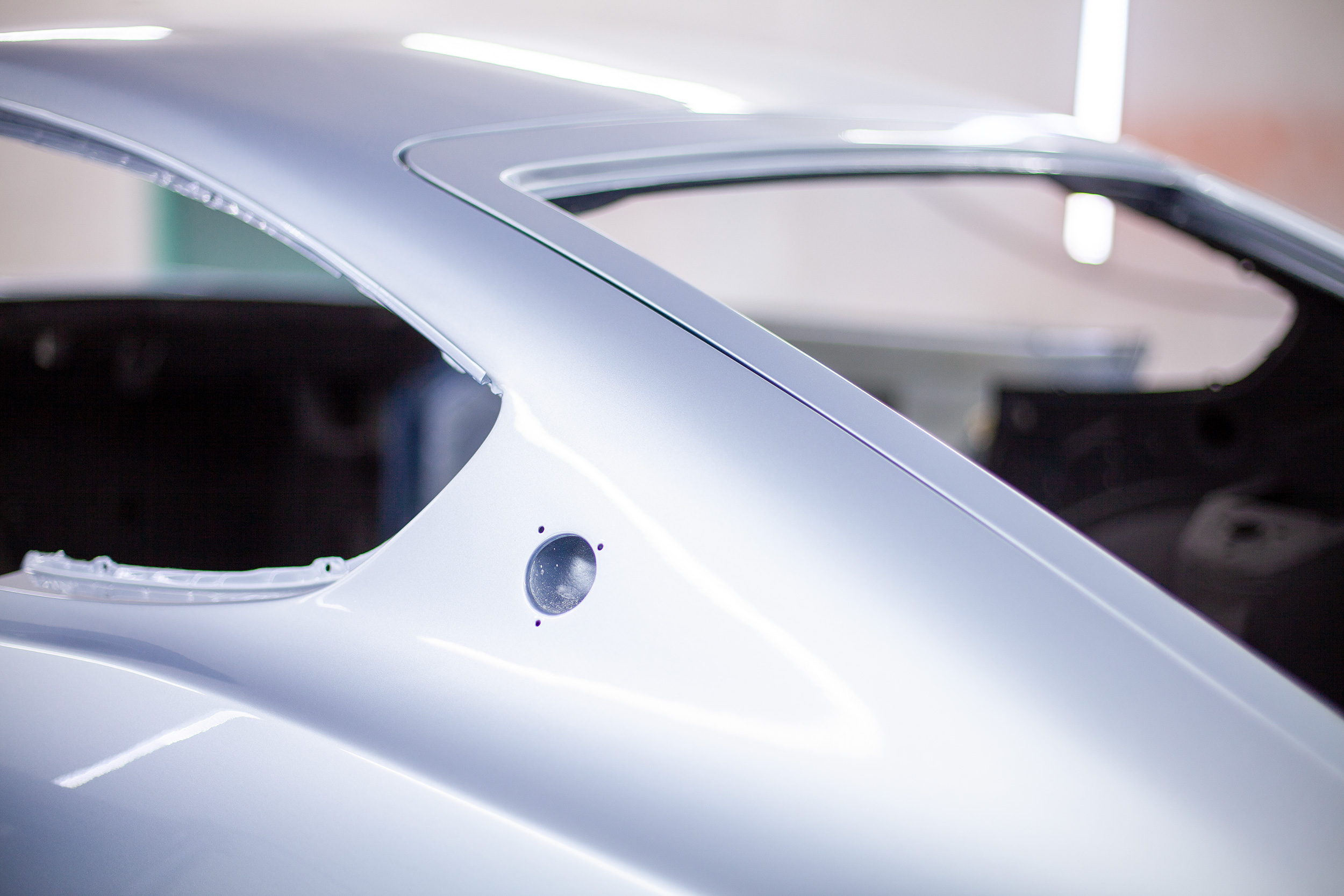
Paint is the most visible element of a Datsun 240Z restoration, but it is also the most dependent on everything beneath it. Glasurit is used throughout — the choice of the world's finest coachbuilders and the recognised standard in professional automotive refinishing. The Glasurit colour coats are applied in a controlled environment, built up gradually across multiple passes, with each layer allowed to flash correctly before the next is applied.
The final stage is Glasurit clear lacquer, applied in multiple coats, flatted to remove all texture, and then brought to an optically smooth, mirror-quality finish through multi-stage machine polishing. The result is a surface depth that the eye falls into rather than stops at — a quality that defines the difference between a painted Datsun 240Z and a truly finished one.
Reassembly, Detailing & The Finished Car
Every component returning to the Datsun 240Z is individually assessed. Items that do not meet the standard are replaced. New rubbers, new seals, reconditioned mechanical components — the quality of every part that goes back on the car must reflect the quality of the bodywork surrounding it. Multi-stage machine polishing refines the Glasurit clear to its maximum achievable quality. Glass, jambs, shuts, cavities, and under-bonnet surfaces receive the same detailed attention as the exterior.
The Datsun 240Z has been a significant car since the day it was launched. The process described here is simply what that significance demands.



View Our Current Datsun 240Z Inventory
Browse the current selection of hand-restored Datsun S30 classics available from Bavaria Sports Cars — cars prepared to the standard described here.
Browse Datsun S30 For Sale